Riding the Lochside Trail

It’s been a while since we threw on the bike panniers and took off for even a quick overnight stay anywhere without a car; the feeling of freedom to ride at the pace we want with our gear, of being under our own steam, thoroughly taking in our surroundings which the speed of a car inevitably denies you.

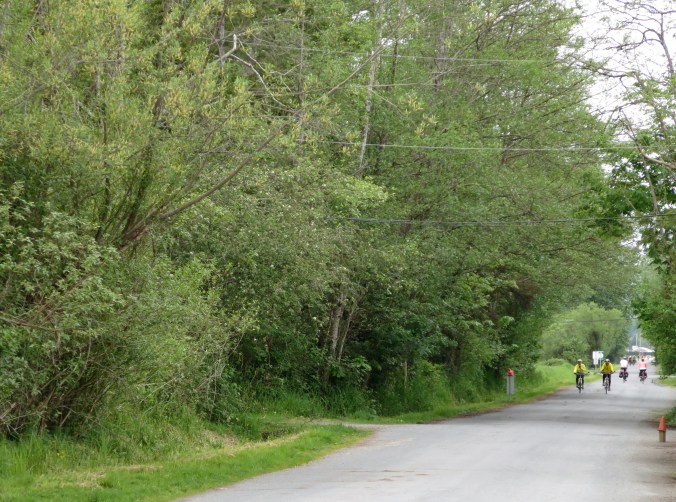
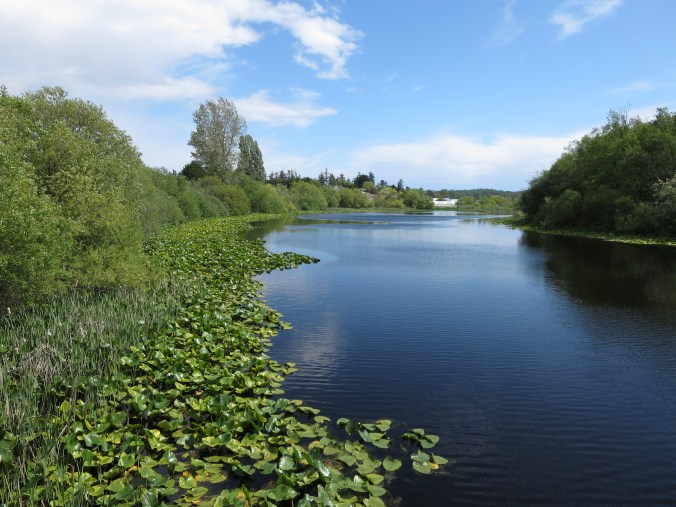
A friend of ours had recently moved to the city of Victoria on Vancouver Island and it seemed like a good opportunity to catch up with his new habitat and to visit another couple we knew who called Victoria home. I’d heard that you could ride into town from the ferry terminal and it turned out to be a wonderful route through some picturesque countryside, only taking a couple of hours at a leisurely pace. It’s lovely. An often tree-lined route that takes you away from the highway past fields, small farms, through quiet residential areas and at times close to the shoreline.

IMG_1752

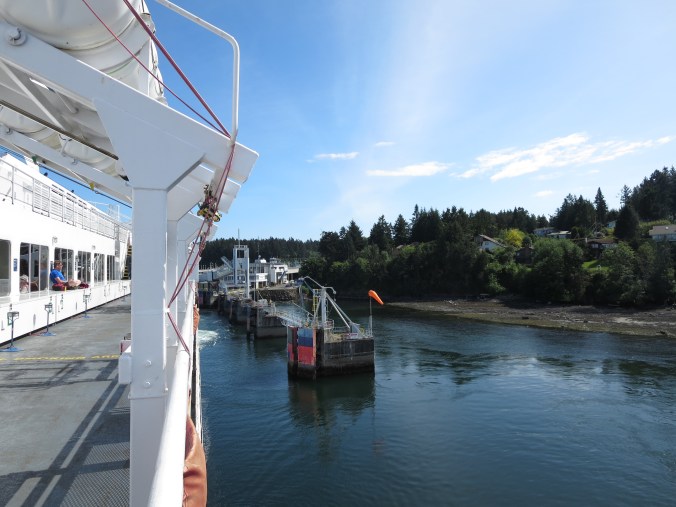
Schwartz Bay ferry terminal

IMG_1733

Picking up the trail

IMG_1740

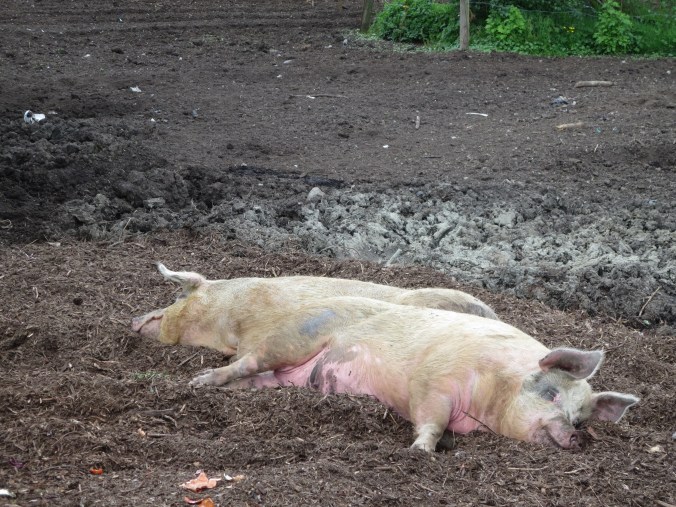
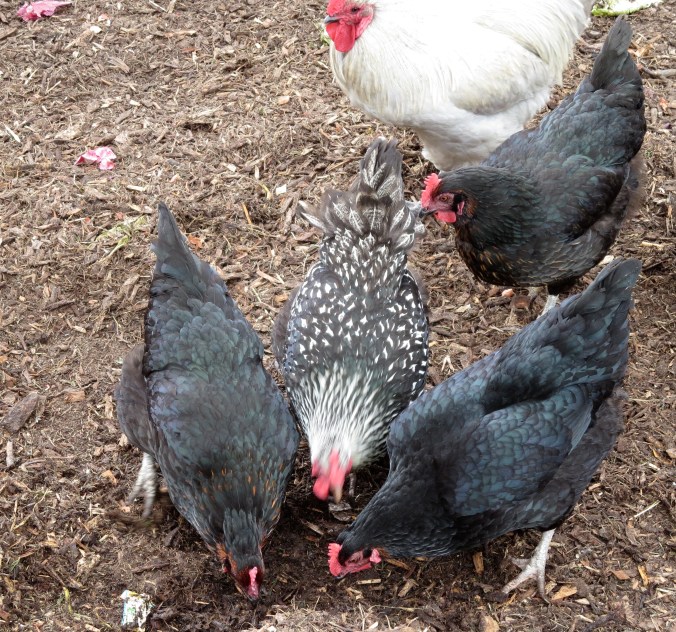
We shared the path with other cyclists, walkers, horses and at one point a goat called Syrup, trotting after her horse pals and riders. Small farms peppered one section as we passed dozing pigs and chickens scratching in the dirt…..

IMG_1737

IMG_1738

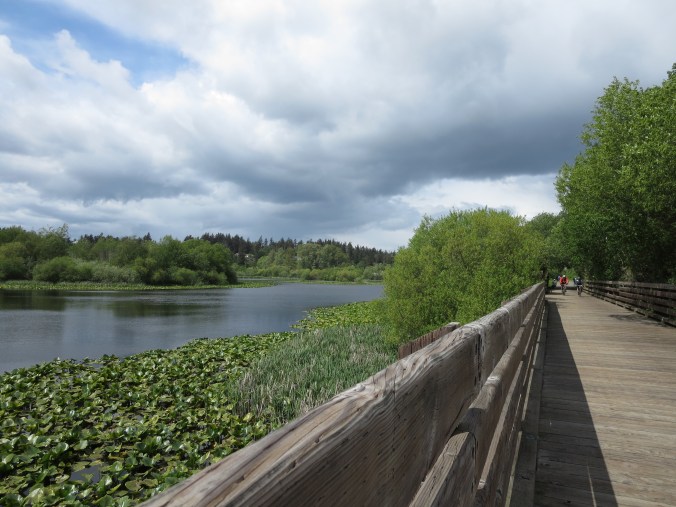
The trail is roughly 30km from the ferry terminal to Victoria. It does cross over roads and is often multi-use, so we kept an eye open for traffic and farm vehicles, although cars seemed few and drivers were considerate. Lots of sections are free of vehicles and incorporate lovely wooden bridges spanning waterways.

IMG_1742

IMG_1743

IMG_1744

As we entered Victoria Lochside turns into the Galloping Goose Trail, with another 60km or so to the community of Sooke – and access to the Juan de Fuca Straight, a migratory route for gray whales. We’re saving that section for a camping trip later in the year. For now we just enjoyed exploring Victoria and catching up with friends. (Victoria used to have a bit of an, ummmm, how shall I say it, unflattering image, one that used to be summed up with the phrase ‘newly wed and nearly dead’.  It’s no secret though that for a while now Victoria  has been growing in popularity as a vibrant area with more affordable housing than on the mainland, hip cafes and restaurants and cool new condos and town homes around its harbour.)

IMG_1747

On the way back to the ferry

IMG_1755

Leaving Schwartz Bay, for now……


A Little Italian Village in Wales

Yesterday was the beginning of spring. The chickadees are chirping, the cherry blossom is already starting to fall – largely because of a torrential downpour of rain last night that sounded like it was coming through the roof – and I’m sitting here coughing away as I nurse a cold/flu. Scott is home iterating some sort of complicated lighting system with tacs and bits of Harvest Crunch cereal box (living with an industrial designer is always an education) so I thought I would do something passively constructive and take a trip back in time to five or so years ago when I visited Portmeirion village with my family. It is the most outrageously pretty and unexpected spot you’ll find in Gwynedd, North Wales, on the estuary of the River Dwyryd. I didn’t take a lot of photos then, too busy walking and enjoying the misty, soft air, but there’s enough hopefully to get the idea.

DSCN0557

DSCN0549

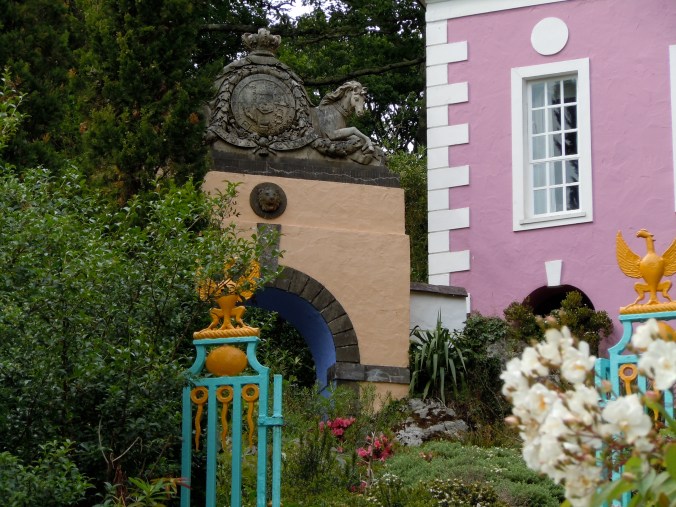
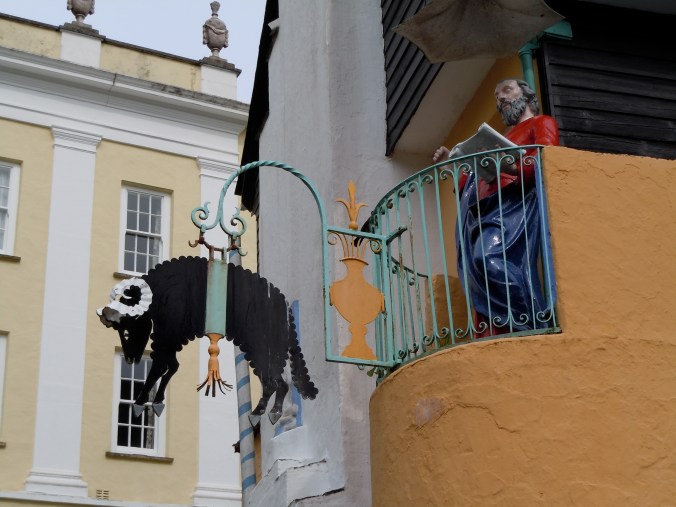
Portmeirion is a bit mad really but with a supremely sane reason for its existence. It’s an Italian style village built by the architect Sir Clough Williams-Ellis between 1925 and 1975. Williams-Ellis was inspired by the Mediterranean and maintained that buildings should enhance rather than detract from the surrounding environment; he  wanted something more romantic and appealing to the senses than the usual mechanistic mode of construction. Fake facades to buildings, carefully painted windows that don’t open, a ‘ship’ constructed into a pathway so you can walk on and off the ‘deck’, statues, fountains, flowers, bright colours and acres of wooded walks that lead to the estuary.

Hotel Portmeirion

Hotel Portmeirion

Shakespeare

Oh, those walks! The smell of mulchy leaves underfoot, the floweryness of the flowers we stumbled upon, the mossy greenness of the trees. It’s all a bit Gerard Manley Hopkins, or perhaps more Rebecca by Daphne du Maurier: ‘last night I dreamt I went to Manderley again….’ without the drama and mystery, although…….the hotel did tragically burn down in the 80’s and had to be completely rebuilt (an accident rather than a mad housekeeper destroying a family mansion). Back to the walks though…..one trail runs through a ‘haunted’ area, rhododendrons run amok in wild garden settings and create arbours of flowers to walk under, other paths twist and turn, double back and generally try to confuse the heck out of you. I always loved trying to find the way back to a particular spot; sometimes it was a Japanese garden or  movingly a graveyard for dogs where pet owners had written tear-inducing tributes to their companions who used to bound happily through the trees.

DSCN0569

Mossy trees

At almost every turn there is the unexpected, the cheeky and the fantastical, all  created with beauty foremost in mind. What results is a lyrical, magical and imaginative environment. It obviously nurtured the imagination of others too: Noël Coward wrote Blithe Spirit whilst staying in the village, the cult 60’s show The Prisoner was shot there, the architect Frank Lloyd Wright visited as did George Bernard Shaw, Gregory Peck and Ingrid Bergman. I imagine they too took long walks on the sand revealed at low tide…

The estuary

The estuary

Truth be to told I’ve been there a few times with family during my childhood. We all loved it, including my grandfather, not a fan of the fantastical. A couple of generations of our pet dogs have been too. You can rent one of several self-catering cottages for a more budget friendly and independent trip (the way we always did it) or stay in the subtle luxury of the Hotel Portmeirion. We would treat ourselves occasionally to a coffee in front of the lobby fireplace or an evening meal in the dining room overlooking the estuary……a little of Italy in the wilds of Wales.

hotel portmeirion


Lavender Revisited

In my previous post The Sweet Smell Of Lavender I mentioned I was in the midst of writing an article about Provençal lavender for the British Columbia Association of Practicing Aromatherapists (BCAPA). The article will be published in the spring newsletter but as the latter isn’t available to the general public it’s been agreed that I publish it on my blog. Hope you enjoy it and if anyone has any comments, corrections or observations to add, it’d be great to hear from you.

Cycling the Fragrant Road: Perfumed Provence Under Threat

Lavender is the soul of Provence

So said Jean Giono (1895-1970), a beloved French author who lived and wrote in Provence and whose love of the natural world, reflected in his mini novel The Man Who Planted Trees, made him an early precursor to the modern ecological movement. René-Maurice Gattefossé (1881-1950), the so-called father of Aromatherapy and the man who coined the term itself with his seminal work Aromathérapie: Les Huiles Essentielles Hormones Végétales, held Provence and the lavender it produced close to his heart.

While undertaking a cycling tour of rural France in the summer of 2014, noting the haze of purply blue flowers that swept to the horizon, there was no doubt in my mind that the intertwined relationship of lavender and France was an indelible part of the cultural and economic landscape. But the bucolic scenes of lavender fields stretching into the distance under a blazing sun belies a furious battle on two fronts to preserve a way of life that has its roots in the Middle Ages.

rural France

Whilst aromatherapists here in Canada have felt the bite of Health regulations in recent years – with the implementation of Natural Health Product Regulations, natural product numbers and product licences – spare a thought for the embattled growers of herbs and distillers of essential oils in France for a moment. The focus of an intense regulatory spotlight is amply personified by the lavender growers of Provence as they seek to resist an attempt to have lavender oil (along with other essential oils) labelled as chemical toxins under the European Unions REACH (Registration, Evaluation, Authorisation and Restriction of Chemicals) program to be implemented by 2018. It is an unthinkable development given the long history of the herb as an alternative therapeutic addition to home and garden and a dollop of salt added to an open wound. Lavender and lavandin – the latter a massive provider of essence for the cosmetic and perfume industry – have been struggling against climate change over the last two decades. A blight has destroyed almost fifty percent of the lavender crop in recent years in the region. A mini cicada has thrived in unusually hot weather, transmitting the micro-bacteria stolbus phytoplasma, which drought-weakened plants have trouble resisting. The disease is contagious, and in the early stages the plants fail to show signs of infection. There is real concern that lavender could disappear from the landscape in twenty or thirty years time.

harvesting lavender

The regulatory struggle farmers face emerged later the same year that I had been travelling in France; news stories featured photos of signs posted in fields we either hadn’t spotted at the time, or went up after we’d left: ‘lavender is not a chemical.’* Concerns that such a designation would mislead the general public with its bold black and red ‘hazardous’ labelling are matched by the troubling fact that the cost of chemical analysis and classification would be a significant difficulty for smaller farmers and producers. Classifying a product that is dependent on the sun, soil, altitude and a myriad of other natural conditions would be challenging in itself. As such a real economic blow to the industry looms on the horizon. At present the blue-gold of Provence is worth over 100 euros a kilogram; according to the French association APAL (Association des Producteurs d’huile essentielle de Lavande AOC de Haute Provence) approximately 50,000 acres of land is cultivated for lavender, with 2000 producers and 120 distilleries. The lavender industry provides 25,000 related jobs that include a tourist industry comprising thousands of visitors to the south of France who come for the panoramic views of the lavender fields in bloom. Draconian regulations and a blight; the potential impact to the region could be incalculable.

lavender fields

Revered for its perfume and therapeutic qualities, lavender has a powerful place in history thanks to its healing and aromatic properties; it is a versatile oil that blends well with almost any other essence. Kurt Schnaubelt noted that the French lavenders are characterized by a high ester content (i), esteemed by perfumers worldwide. Therapeutically lavender has been found to have a marked sedative activity (ii), and the true or ‘fine’ lavender grown from seed, the Lavandula Angustifolia P. Miller that APAL protects so rigorously, is calming and balancing. Recommended for respiratory ailments, asthma, spasmodic cough, influenza, bronchitis, tuberculosis and pneumonia (iii), lavender is often used directly on the skin to treat anything from cuts and scrapes to insect bites and burns. This was famously demonstrated by Gattefossé after an explosion in his laboratory resulted in burns that became infected. Applying lavender oil to his burns Gattefossé was astounded at the antiseptic and healing properties of the essence.

In France the seriousness and scale of lavender essential oil production, and the use of oils in the therapeutic and perfume industries in general is tangible. In the last three years Bulgaria has overtaken France in its production of lavender oil and as the challenges besetting French lavender growers have intensified and production has exponentially decreased, Bulgaria has profited, although ultimately the EU regulations will affect Bulgaria as a member country in the same way. Yet even a Bulgarian producer acknowledges the superiority of true French lavender: ‘At the same time we can’t praise with better quality, though, as French lavender oil remains the standard.’ Only four areas of France produce the highly sought after AOC (now AOP) labelled lavender oils, the departments of Drôme, Vaucluse, Alpes de Haute Provence, and the Hautes Alpes. The AOC designation – Appellation d’Origine Contrôlée – can only be used for Lavandula Angustifolia and is the standard against which lavender oil is still assessed. The fine or true oil must come from plants grown at a minimum altitude of 800 meters.The product must pass a double series of tests both analytical and olfactory and the individual batches are sampled and examined under anonymity. The standard is high, the tests for quality rigorous.

For our cycling tour of the Vaucluse – the heart of Provence – we opted to stay in the charming town of Sault, situated like so many other villages in the area on a rocky promontory on the Albion plateau. It was an ideal spot for not only the cycle friendly accommodation and scenic roads but for access to the local lavender growers and businesses that make up a large part of the economy of the region. The Albion region is the top producer of lavender, yielding 40% of the country’s production, the majority of which is dedicated to creating perfumes, supplying therapists with high quality oil and manufactures of lavender products with raw materials. A local sign describes the region a little: ‘The landscape here is structured around a large north-south depression from Aurel to Monieux between Mont Ventoux and the plateau of Albion. Villages and towns are strategically built on rocky spurs, offering them good views as well as protection. The scent of lavender, golden fields of cereal crops and flocks of sheep have been part of the lives of Sault inhabitants for several centuries’. Cutters or ‘coupeurs’ of lavender supplied the flowers to the Apothecaries of Carpentras in the 19th century and distilleries were later installed to produce the essence of lavender. Lavandula Angustifolia began to be seriously cultivated at the beginning of the 20th century at the request of the perfumers of nearby Grasse – world capital of perfume production – and by the beginning of the 21st century was established as the centre of fine lavender cultivation. In 2008 lavender growers signed a joint charter with the national Minister of Agriculture dedicated to the sustainable development of lavender, countering the trend towards mass production with its potential side effects of reduced quality and increased pollution.

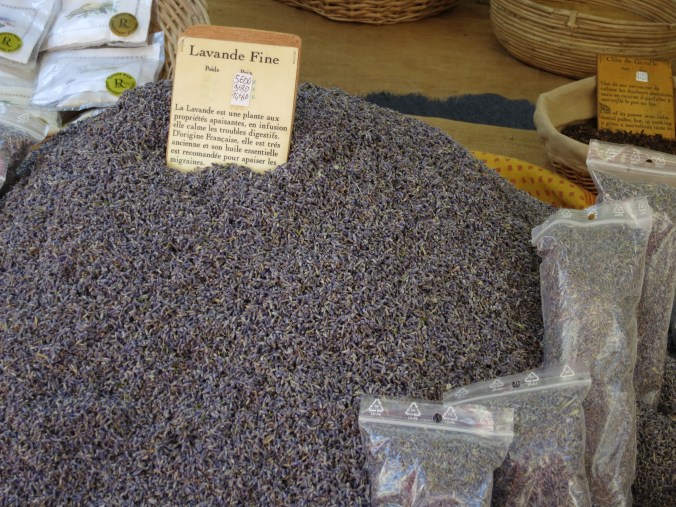
The scent of lavender even relatively early in the growing season is omnipresent in the area. The day we cycled into Sault was midway into the second week of June and midway through an unexpected heatwave. By early afternoon the temperature had climbed to nearly 40c with no sign of abatement and the feeling of being utterly parched had become the overwhelming sensation. On the climb up the last of what had been many hills that day into town we were happily distracted from our aching limbs and dry throats by the smell of lavender. It was barely in bloom, really only just in the first blush of flowering, but the aroma was tangible. We found this over the entire region; combined with the heat, the quantity of the crop let alone the local shops selling soaps, oils, bouquets and other related products, the fragrant air was imbued with lavender. In the town centre we found delicious lavender ice cream (made using the flowers) at a local crêperie that we fell on with the desperation that only the overheated can appreciate; the weekly market sold bulk lavender and we were presented with a bar of lavender soap by our hotel patrons on our departure.We reciprocated with a local lavender infused honey found at a farm stand by the side of the road the day we rode back from a monumental climb up nearby Mont Ventoux.

lavender ice cream

Leaning over one of the walls overlooking the valley below Sault, it becomes quickly apparent the entire area is filled with lavender fields, interspersed with pockets of spelt, photogenically arranged in opposing directions and angles. The more popular routes to Mont Ventoux and into the surrounding countryside were well marked with signs for following a lavender trail. We were lucky one day to choose a quieter road in the quest for a few hours of relaxed riding with a good meal at the midpoint. We circled around the valley and back up into the hills to a high point over the plateau to earn our delicious ‘cyclists lunch’ (meaning substantial and reasonable) at a local restaurant. A wonderfully scenic route past fields on tree shaded roads led us to stumble across a gem of a local lavender farm. In the village of Ferrassières in the adjoining Drôme department we met a farmer called Natalie who was putting together bunches of lavender flowers to sell at local markets. Sacks of lavender flowers were stacked against the walls of her shed, and from her shop I bought a bottle of oil that had been distilled from the previous years crop. Answering the question I’d posed in broken French, she nodded that ‘oui’ the oil was the fine lavender, or true lavender found at higher altitudes in Provence, the angustifolia family that is considered the ‘nobler’ plant. On arriving back in Canada I opened up the coveted bottle of lavender oil and it smelt wonderful; subtle and rich, not overpowering, fully meeting the high expectations I had for a true French lavender.

As our holiday in France was to end with a couple of days in Paris, it made sense to visit the Fragonard Museum – the Fragonard perfumery is one of the oldest perfumeries in Grasse – to sample some of the end results of the work in Provence, and to place in historical context the growers and producers of plants and their essences in the region. The museum is small, private and no cameras are allowed inside, but it gives a fascinating insight into the story of perfumery. Numbered vials of solid perfumes tempt you to test your smell perception to detect more unusual scents: strawberries, pineapple, sandalwood or perhaps sweet pea. Lavender, rose, jasmine, orange blossom and mimosa are just a few of the flowers supplied by Grasse and its surrounding areas for perfume making, the art of cultivation culminating in the exquisite art of perfumery.
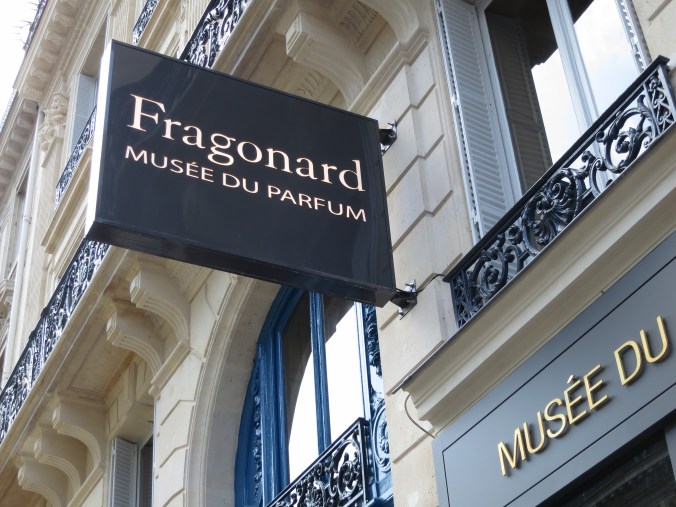
Fragonard museum

There is perhaps some hope on the horizon for the lavender producers of Provence. A collaborative three-pronged effort is underway between the local growers cooperative France Lavande, a French fragrant plants research organization (CRIEPPAM) and Givaudan, a major company in the fragrance and flavour industry. Givaudan is financing the supply of healthy lavender plants from CRIEPPAM to the cooperative members in the hope that the decimation of lavender plants can be mitigated and production increased. At the time of writing there is no further news on the EU regulations, although there has been vigorous opposition to the proposed rulings and concerns aired in discussions with EU officials. An online petition challenging the regulations had at last count garnered 22,429 signatures. The hope remains that lavender can perhaps be designated as an agricultural product and thus bypass the complexities of chemical classification.

Exploring what remains at present, despite the struggles, a dynamic and thriving region on exquisite country roads made riding a delight and an ideal way to experience first hand the artisanal lavender farms and the scenic surrounds at a pace that allows full appreciation of the area. As it was France we of course felt obliged to indulge our gustratory senses (sublime cherry clafoutis anyone?!) whilst learning more about an exceptional plant and the commitment of the people who grow it to achieve the highest quality possible. There is great pride in lavender, the economic support it provides and the identity that comes with this beautiful blue flower. Hope that this way of life continues is tinged with disbelief at the thought that lavender might one day disappear from the horizon. Lavender is, after all, the soul of Provence.

* It should be noted that whilst the belief is essential oils should not be classified as ‘chemicals’ and are wonderful substances to have in your home, they are highly concentrated products and should be treated with respect. Keep out of the reach of children and pets, do not ingest, do not use undiluted and use as directed on the label or by a qualified practitioner.

Bibliography:

(i) Advanced Aromatherapy, Kurt Schnaubelt (1995)
(ii) Essential Oil Safety, A Guide for Health Care Professionals. Robert Tisserand, Tony Balacs (1995)
(iii) Aromatherapy for Health Professionals, Shirley Price, Len Price (second edition, 1999)

Sources:

APAL
France Lavande
Givaudan
CTV News, Canada
The Guardian, UK
BHP Radio Bulgaria
CRIEPPAM

© On A Small Blue Planet by Amanda 2016
The Sweet Smell of Lavender

In the summer of 2014 we undertook a great cycle tour (my first) of France, which I described in a couple of posts, A Nightingale Sang and The Joy of Eating. As an aromatherapist essential oils are a crucial part of my work, and being a big fan of lavender we of course had to take in the some of the lavender routes in Provence, which I talked about a bit in The Fragrant Road. I’ve been doing a little research recently about lavender, writing an article for my aromatherapy association newsletter which I hope to post a link to once it’s published (or post online in full on this blog) with more details of the serious issues facing lavender production in Provence. I hadn’t realized it at the time of our holiday, but the plant is under serious threat, a bacteria is attacking the lavender crops and EU regulations are looming on the horizon wherein the oil (and other essential oils) could be labelled as chemical toxins, something that could inhibit the general public from feeling confident about using these lovely essences*. A bacteria and draconian regulations could seriously affect the economy of Provence – a tragic development given the long history of lavender in the region.

As I looked deeper into these issues I stumbled across some real attempts to a) salvage the crops from the devastating blight and b) fight the EU regulations and perhaps have lavender oil classified as an agricultural product, so avoiding the chemical designation. And the French Institute  CRIEPPAM – Regional Center for Medicinal and Aromatic Plant Research – has combined forces with a German perfumery company, Symrise, to introduce a new harvesting machine that removes only the flowers of the lavender plants, excluding the stems, resulting in a fresher more modern scent at the same time as reducing the environmental footprint of harvesting. Some people tend to think that lavender can smell a bit ‘old-fashioned’ – depends how you use it I think. A true lavender is gorgeous, and when added to a blend can impart a rich, subtle and balanced aroma.

Lavender oil is probably one of most well-known of essential oils, but if you haven’t tried it the ‘true’ therapeutic lavender, Lavandula Angustifolia, is a fantastic oil to have in your arsenal of helpful essences. I’ve used it (diluted) for bites, stings, burns (sunburn and otherwise), spots, massages, in a facial oil, in the bath and to smooth and give body to oil blends. It’s healing, hypotensive, relaxing and calming. Not bad for one little herb.

IMG_3120

* It should be noted that whilst the belief is essential oils should not be classified as ‘chemicals’ and are wonderful substances to have in your home, they are highly concentrated products and should be treated with respect. Keep out of the reach of children and pets, do not ingest, do not use undiluted and use as directed on the label or by a qualified practitioner.

The Wild West Coast

Recently we hopped onto a ferry and drove for three hours on a low-key, beautifully scenic route (once out of any major cities or towns) past stately Cathedral Grove – location of towering old growth trees – to Tofino on Vancouver Island’s Pacific coast. I’d booked us three nights at a local hotel so that we could enjoy a small break from our busy schedules and listen to the uninterrupted sound of the ocean, the wind and the rain. We went with books (no bikes this time) our cameras and with the intention of long walks on the beaches and in the forest. Tofino is renowned for its rainfall but as it turned out we caught it at a time of lovely balmy temperatures and some gorgeous sun that intermittently made an appearance.

DSC_8201

Mackenzie beach

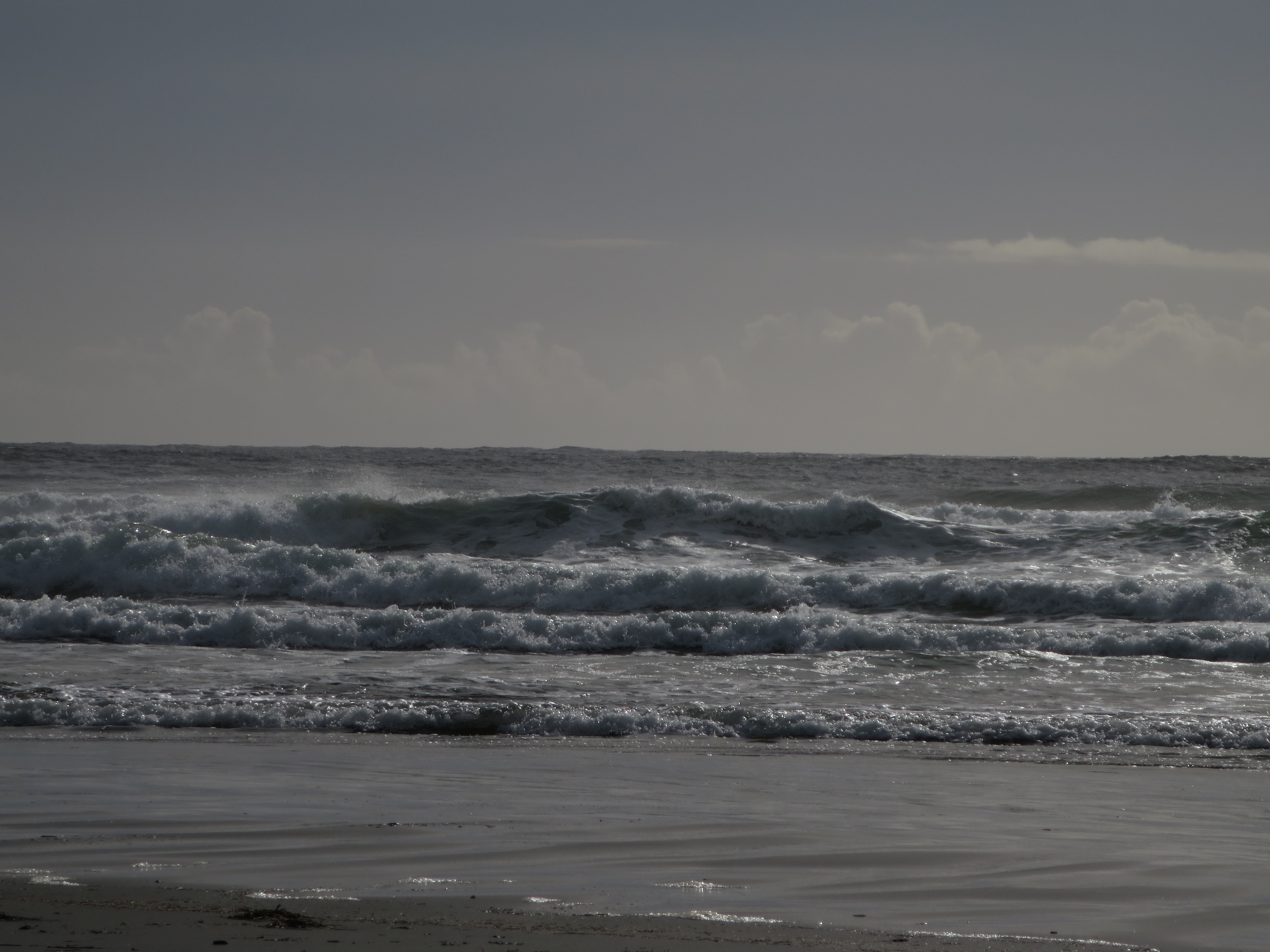
It doesn’t seem to matter whether the sky is blue or a moody shade of grey, every incarnation seems to suit the environment. The surfers didn’t seem to mind either as they made their way in and out of the frigid waters. Perhaps the most popular beach with tourists and surfers alike is Long Beach, located in Pacific Rim National Park itself (the town of Tofino is outside the border of the park). The always cold ocean means wearing a wetsuit year round….

IMG_1645

Every night we heard the ocean crashing on the beach below our open bedroom window. One of those nights I woke up to light edging around the curtains and quietly got out of bed to look out at the moon reflecting perfectly off the waves. Each day we walked and walked, ate, drank some wine and read.

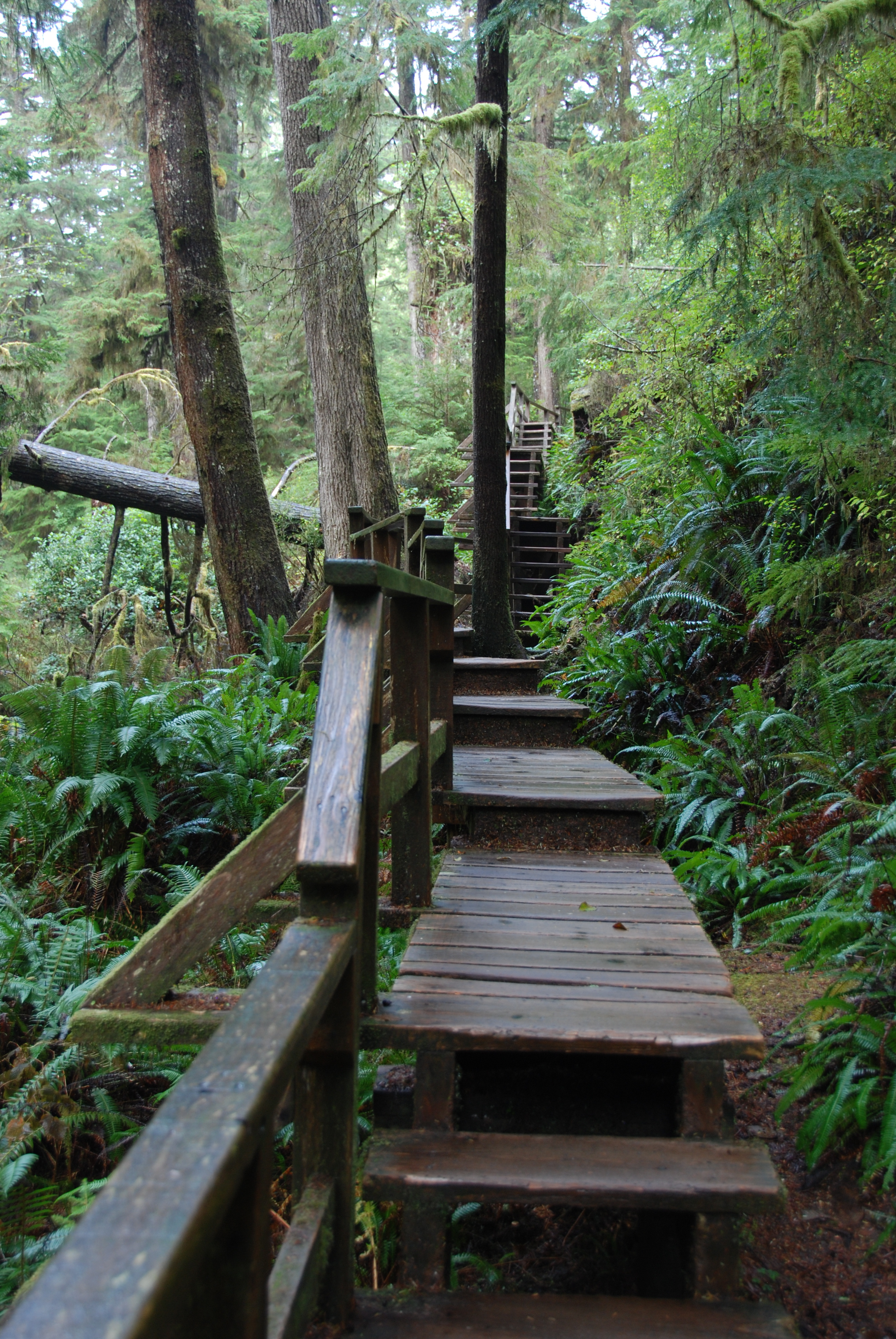
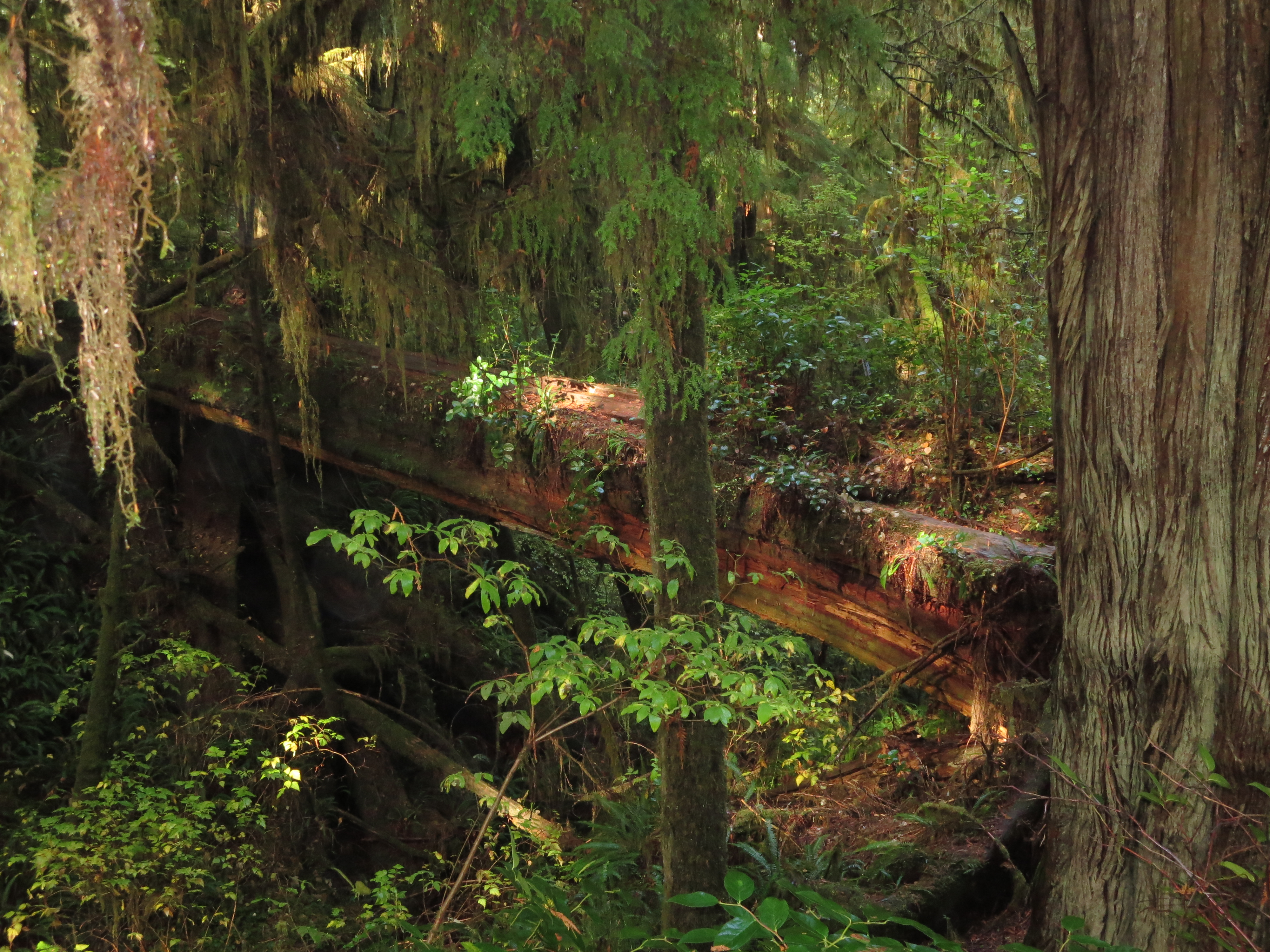
We roamed from the openness of the beaches to the confinement of the rainforest walks with their remnants of ancient old growth cedar and Douglas fir trees. The forest is full of seen and unseen life amidst the decaying mulch, yet unlike the constant roar of the ocean the forest is eerily quiet, interrupted by the occasional sound of birds, a singular rather lonely sounding frog (it’s not the mating and breeding season when they’re usually in full croak) and the dripping of water from leaves after a night of pouring rain.

DSC_8183

Boardwalks protect the delicate forest floor.

IMG_1636

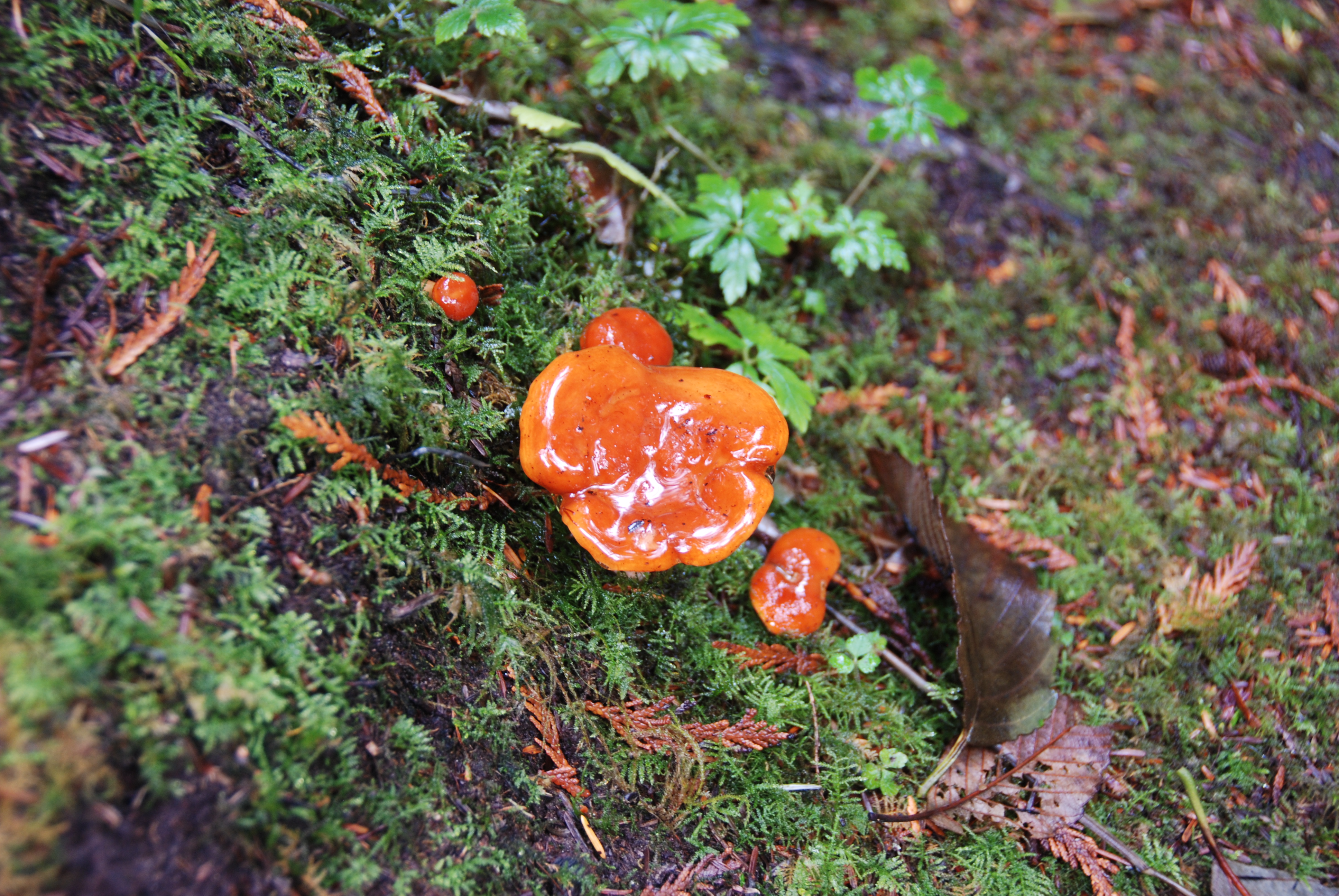
Glistening, preternatural fungi

Glistening, preternatural fungi

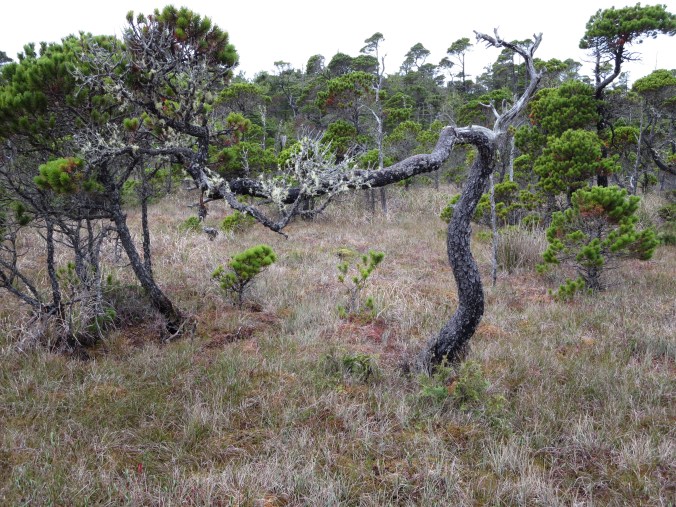
It’s a beautiful area, and still wild in places. Bears, cougars, wolves, a variety of birds, orcas, fish and sea lions are some of the species that make the area home…. we saw evidence of a bear on one of the forest walks near the water. Fishy-smelling droppings (very fresh) and further on another pile, this time full of berries. We left the bear to his or her peace and moved on to a totally deserted bog walk, completely different, just a few minutes from the forest. Acidic soil and a lack of nutrients means that the only trees that grow here are Shore Pines, stunted and gnarled….

IMG_1628

The start of the West Coast Trail begins in the region, a trail that sounds fantastically challenging and which seems to produce many injured hikers every season. It passes through First Nations territories that have been occupied for thousands of years and has a fascinating past as a life saving trail for shipwreck survivors and rescuers.

For the first time I did consciously think of the dangers of tsunamis, with local sirens and notices along the highway advising when you are ‘now entering’ and ‘now leaving’ the tsunami hazard zones (i.e down hills and up again). It didn’t detract from our enjoyment, rather it enhanced the sense of how vulnerable this low-lying region is, and how truly wild the west coast could be, even when it looks so benign.

Long Beach

Long Beach


Save

Save

Seven Summits, Rossland.

I lay sprawled on my back across a rock glistening with rain, more of which was falling on my upturned face. Thunder rolled around as arcs of lightning shot across the sky, throwing into sharp relief the power lines that were laced across the open area cleared of trees. My mind seemed to have stopped processing what was happening, I was exhausted and it showed. Is this what mountain biking is about? It was only two years later that my bike tried to kill me on Vancouver’s North Shore (flew over the handlebars and broke my thumb and elbow and concussed myself). But I love the sport and I’ve missed it this year.

Our mountain biking has been a bit truncated this summer. It’s been so unusually hot this year that our first thought was not to jump on the bikes and overheat on steep pitches but to jump in the nearest body of water we could find. Forgivable I think. But we are yearning for some riding now. Work, and more enjoyable activities like the Vancouver Film Festival, catching up with friends and such have been getting in the way. So I thought I’d revisit the Seven Summits Trail we rode three summers ago now for inspiration.

The trail is listed on the International Mountain Bike Association’s very selective list of Epic Rides, and was named ‘Trail of the Year’ in Bike Magazine 2007. This famous (perhaps even infamous) route in Rossland, BC is perhaps (but I’m contesting this) a once in a lifetime ride to attempt. It’s not for the beginner as it requires significant endurance with some technical challenges along the way. Intermediate riders are encouraged to give it a try, if they consider themselves ‘determined’. The IMBA description puts it thus: ‘The trail is remote and exposed with few escape options, the weather can get wild, and there is no water on the trail, so be prepared’.

I had just purchased my beloved Specialized Stumpjumper, the first mountain bike that wasn’t a hand me down or loaner. (I’d been using my brother in law’s Brodie which I was pretty attached to, particularly the crazy twisted spoke lacing pattern which attracted lots of attention) but had no intention of sacrificing myself on the altar of ‘serious’ rider, I just like being outside and love the adventure of riding in quiet, more remote areas. The Seven Summits seemed to fit the bill. There were no crazily obvious risks and the trail is challenging but not necessarily life-threatening. However even knowing the trail specs with its advanced technical and extreme physical ratings, we hadn’t banked on how much of an absolute energy suck that riding for so many hours, at a higher altitude than we were used to would be. Or what a fantastically great experience it turned out to be.

An Epic Ride is considered somewhat of a rite of passage in mountain biking parlance. No matter how fit you are mountain biking can be gruelling at times. There are more often than not roots, rocks, trees, sharp inclines up and down to negotiate, and a steady concentration is needed to assess the constantly changing terrain. On an Epic ride you’re enduring all that, but for hours on end. However, the potential for an unforgettable day out exponentially increases with the hours invested in the ride. Plus it’s fun, so we loaded up the car with bikes and headed for the interior. We’d heard there was a decent enough campground in Rossland, with, oh joy, showers (trust me, you need that minimal luxury after hours of sweaty riding). After a six-hour journey from Vancouver we rolled into the campground to serendipitously find the last free spot to pitch a tent.

As the trail is not a loop but is intended to be ridden point to point north to south for about 35kms we booked places on a shuttle that would drop us off around 8am at the trailhead. With 4-8 hours recommended for the ride, it’s a full days commitment. We’d heard of extremely fit cyclists completing the ride in about three hours or so, the average seemed to be about 6 or 7. There’s serious elevation, over 1000m, with the first and most demanding of the climbs using up about 600m in vertical gain. Plenty of food, water, extra layers for warmth and a rain jacket are essential for the changeable mountain conditions. With very limited cell coverage you’re pretty much on your own out there. Logistics taken care of, we checked over our ample supplies of fluids and food for the next day and chatted to a couple who had ridden the trail that day over a glass of wine. They’d taken about six hours to complete it, a good average for visitors by all accounts. Feeling mellow as we sat by the fire and carb-loaded, we agreed it didn’t sound too bad.

There’s nothing quite like lack of sleep to erode your confidence. We shifted from a wakeful but excited anticipation to an insidious anxiety, as if the fog that was forming overnight was creeping into the tent to prod silently at us with a finger of fear. Rest was elusive as we woke up multiple times and slowly drifted off back into a shallow sleep, starting awake again in the expectation that the alarm was about to go off. Doubts crept in, we’re both strong but neither of us had ridden on trails for that long before. There were no other riders booked on the shuttle and the possibility of changing weather conditions niggled at us. We’d heard tales of cold so debilitating riders could barely function and had had to retreat. There was also the knowledge that after a certain point, there is no turning back for a quicker exit, just a couple of emergency exit chutes out virtually in the middle of nowhere.

Dawn broke blearily to reveal the thick low-lying fog that had formed. Perhaps the perfect reason to gracefully withdraw from the venture had presented itself to our jittery nerves. It was advised to not set out in marginal conditions, but we had checked the forecast and admitted it was good, the mist could be just valley specific. Which is exactly what it turned out to be. As the shuttle van took us to the head of the trail on the gradual but steady incline we suddenly burst out of the gloom to a gloriously sunny, temperate day. A bluebird sky, the saturated green of the trees intense in the light. Perfect riding conditions. Funny how just a switch from gloom to sunlight can change your entire mood, from negative to positive.

Seven Summits, Rossland

Seven Summits Trail

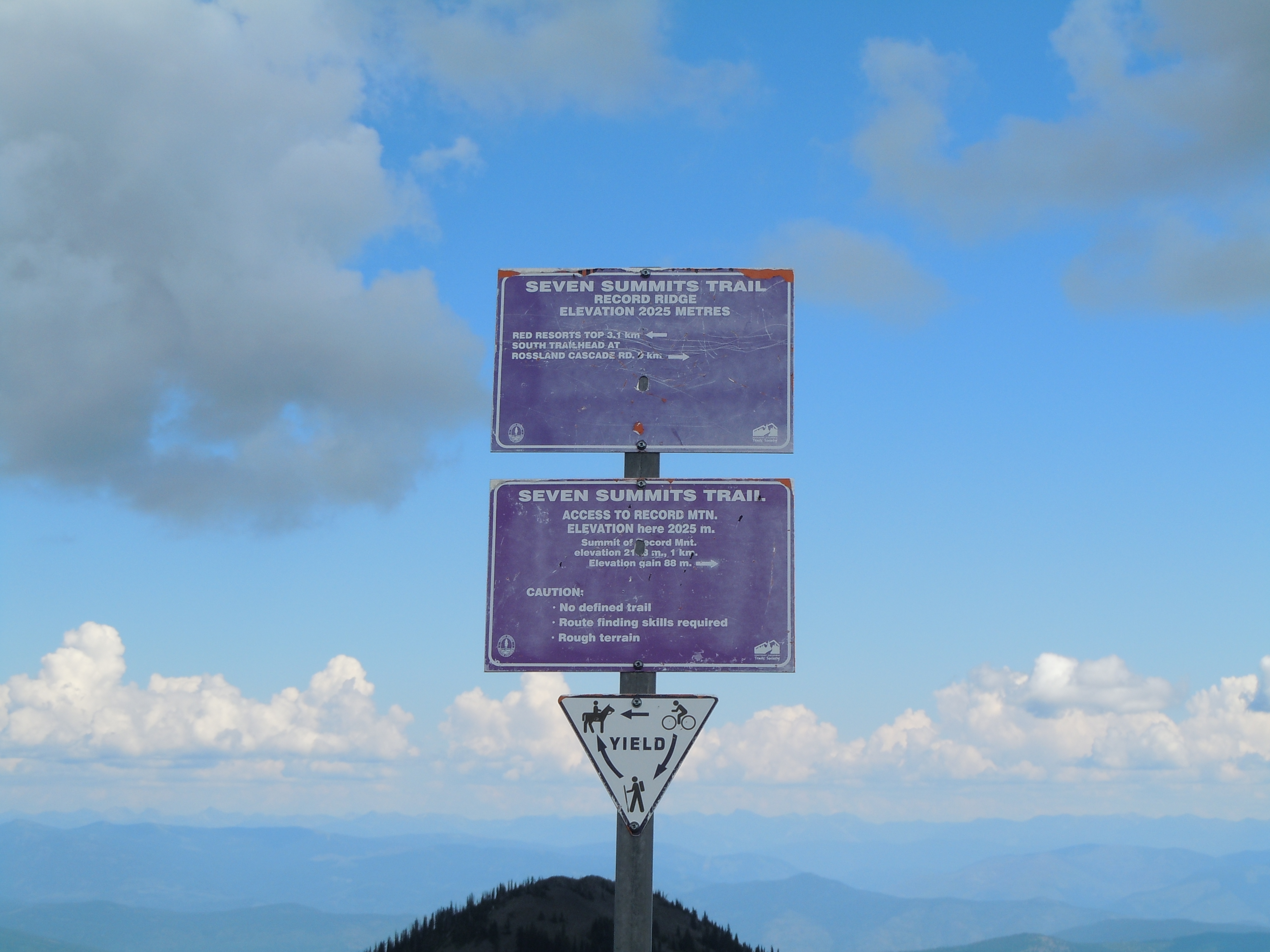
We hopped around a little in the chill morning air, checking and re-checking our supplies, watching our shuttle ride vanish back towards town and read the warnings posted at the start of the trail about the challenges ahead with something approaching panic. Finally, we decided just to man up and get riding. Multiple dashes into the woods dictated by nervous bladders were cut off and we finally mounted our bikes.

Seven Summits Trail, Rossland

A gentle start to an epic mountain bike trail

Initially, we rode into what were unexpectedly pretty woods, lush grasses covered the ground on a gentle approach to the first climb. We were being lulled into complacence however, as quite suddenly the trail angled away and up, and stayed that way for the next two and a half hours. A buff but relentlessly technical trail in its steepness, we wrestled over sporadic roots, lungs wheezing. The extra altitude was immediately apparent and I seriously entertained calling it quits after an hour or so, I had no idea how I could do this for the next several hours. I was so close to calling out to Scott that I couldn’t do it anymore, but something like pride and stubbornness stopped the words in my throat. Just as we thought it would never end, we topped the first rise.

Kootenay Mountains

Riding towards one of the summits

Seven Summits, Rossland

Flinty shale….but not one puncture.

Epic mountain bike trail, Rossland

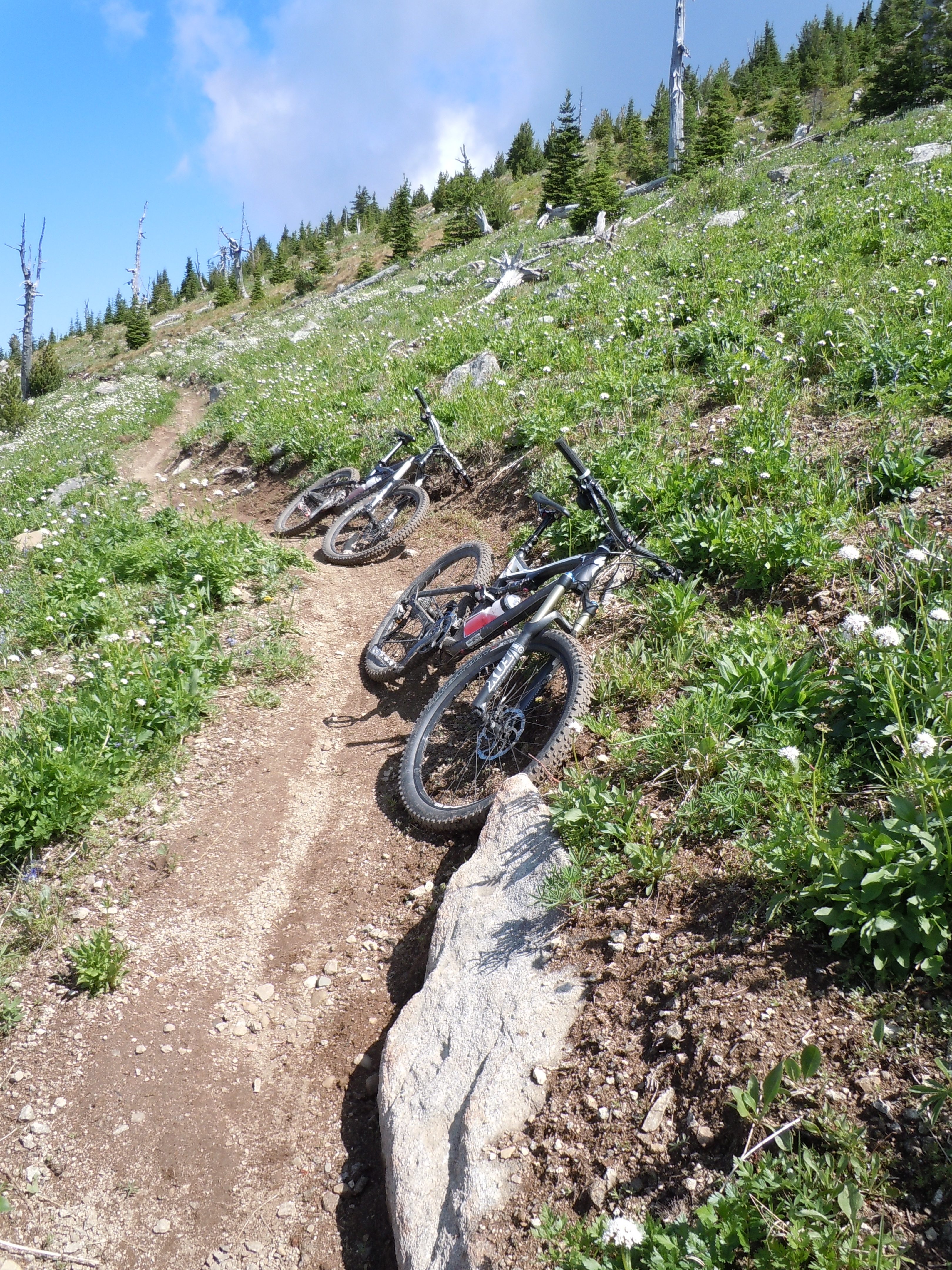
Trusty steeds taking a break

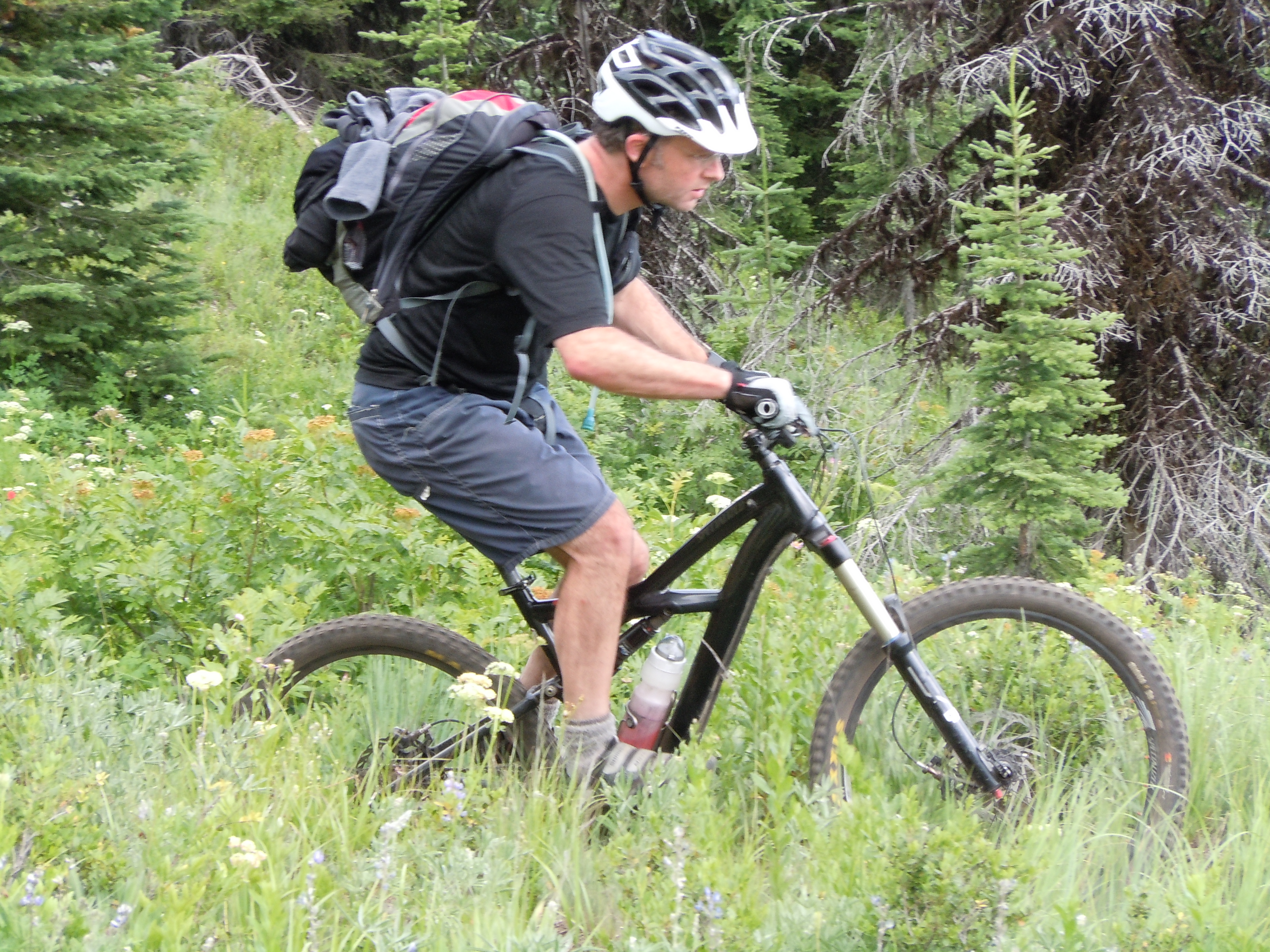
It’s not that it’s easy street after that first shock but it was never quite as hard, more of a test of how well you can settle into a rhythm of riding that goes on hour after hour. Re-fuelling regularly with water, electrolytes and food was punctuated by beautiful vistas of distant peaks, wooded slopes and wildflowers. Every climb upwards seemed to be rewarded by an exhilarating, sweeping sweet descent through open meadows, thickets of trees or exposed rocky outcrops. We barely saw another soul for hours at a time, then suddenly a lone rider or group would pass by, rarely stopping or sparing the coveted breath to say hello. I guess oxygen choices had to be made, but we were happy to know we weren’t entirely alone, at least for a few moments.

Kootenay Mountains

Glorious vista

It must have been about six hours into the ride that we heard the first distant boom of thunder. Up until that point the weather had been kind to us, cloud obscured the sun at times but gave us a break from any intense heat. Looking over our right shoulders we could see thickening darkness and suddenly we were in a race to outrun a gathering storm. The lightning wasn’t far behind and we did our best to speed across open stretches to the perceived safety of dense woods. At one point we passed a group of hikers taking shelter in the lee of a hill as the rain started to fall. Calling out ‘hello’ we were answered with waves and relaxed hellos back. It was only as we dropped onto a forestry road, the first we’d seen and near to the final hour of the ride, that we realized what had happened. An ambulance was waiting and paramedics were preparing to walk for an hour up to meet the hikers, one of whom had broken a leg. A sudden reminder of the remoteness of the region and how lucky the hikers were to be relatively close to the end of the trail and to have got the word out that they needed help.

Meadows, Seven Summits Trail

Scott in riding nirvana

The rain was torrential by then on the final descent on Dewdney road that would ultimately lead us back to the campground. We were suddenly in an area that was muddy and slick with the detritus of cleared forest. As we descended under some power lines it was at that moment that I hit a rock and flew off the bike, which partially landed on me. Scott’s face loomed into view: ‘what are you doing?!’ I was too tired to even speak as I lay immobile staring in fright at the lightning. Staggering to my feet we lurched haphazardly down the rest of the trail, making way for a sudden glut of riders that appeared who were faster and had more technical prowess than ourselves. A trio of cyclists took a breather as they were about to pass us and in a friendly way we compared notes. ‘Great ride’. ‘Yeah, fantastic’. ‘When did you start?’ ‘8.30am, you?’. A shocked silence was followed up with ‘11.30’. Perhaps embarrassed for us that we had taken three more hours to arrive at exactly the same spot at the same time, they took off to spare us further humiliation. Ah well, we may not be the best riders but we have tenacity, I’ll give us that.

A couple more tight turns and we were back on the tarmac as suddenly as we had left the first road that morning. As we cruised toward the campground, we realized we’d left the rain bumping up against the hill behind us and entered our site to sun bouncing off the tent, the leaves in the trees above softly rustling. I’ve never felt quite so shattered and exuberant at the same time, wine and beer had never tasted so good, and…I want to do it again.


Halcyon Days

As the wind whips through Vancouver and rain (finally) makes its welcome return after a drought stricken summer, I’m already missing the sun and warmth. We knew this would happen, and that we’d start to yearn for the long summer days but I guess it does make the memory of a sweltering week-end away all the more valuable. Life is full of contrasts, non?

Take one rustic (read very basic) cabin with no water or electricity, a pit toilet a relatively short walk through the forest with no door, a dock reaching into the lake the cabin fronts onto, add plentiful sunshine, no crowds and temperatures hovering in the high twenties and you have a three-day idyll. Escaping a holiday week-end in the city for the Sunshine Coast we took an easy 40 minute ferry outside of Vancouver, added in about an hours drive up to the quiet community of Egmont Village and ended up driving down a grassy, largely unused track posted with signs for us put up by my sister and her husband to the borrowed cabin. In all fairness there was a fridge we could run on propane and a gas cooker which made life relatively easy. Huge fry up breakfasts of egg and bacon, pancakes with yogurt and fruit, plentiful coffee. Oh yes – the coffee was on the go from the moment whoever woke up first and started the first pot and kept going for a good hour or two before food was plated – all this struck me as a quintessentially Canadian cabin-on-the-lake holiday experience.

DSC_8122

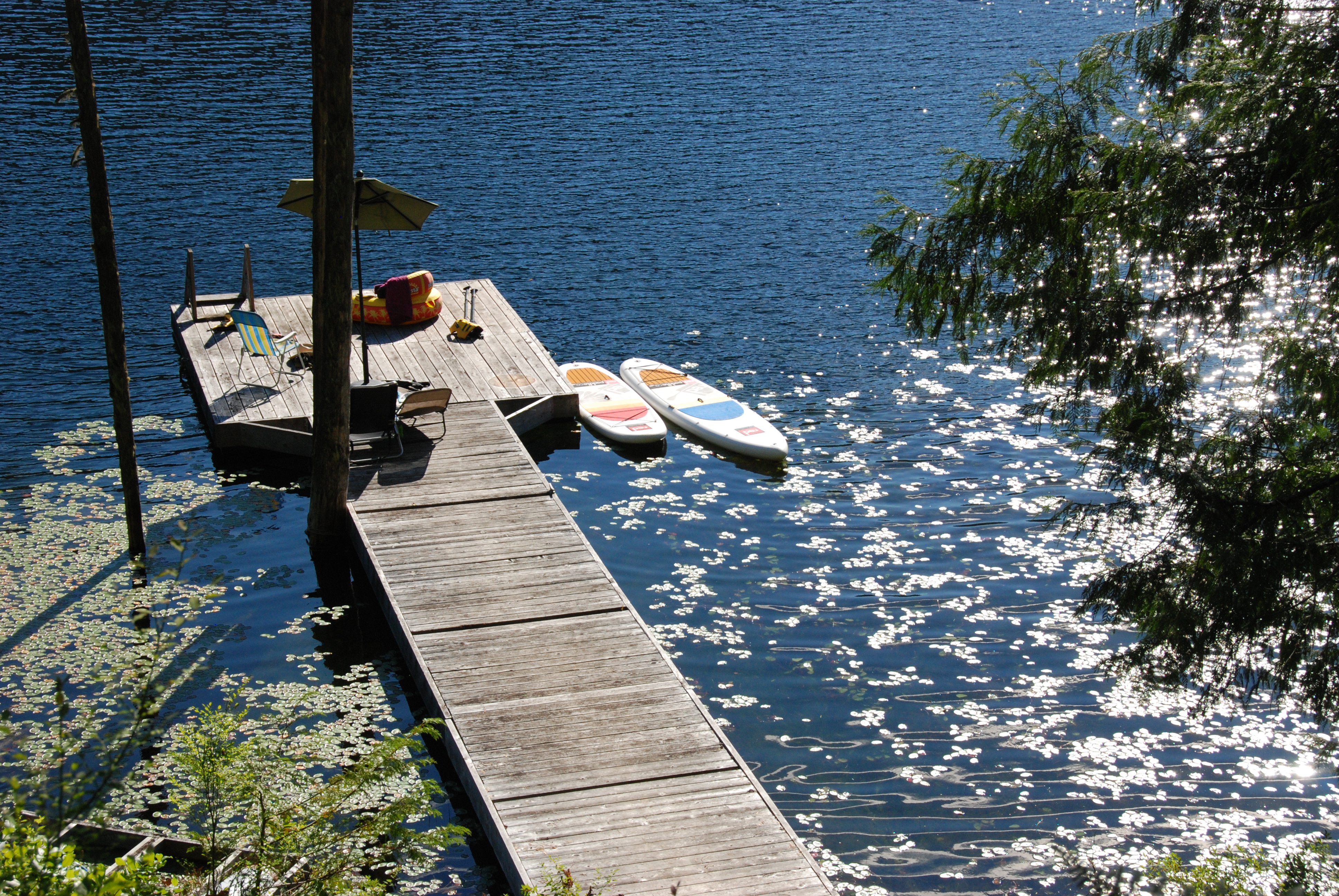
The cabin dock, it made every steep walk up and down to it worth it.

Swimming ruled the days, too hot to ride much we did explore the local, seriously hilly roads into the village and past the exquisite looking West Coast Wilderness Lodge (we peered through a small side gate at the inviting looking restaurant terrace but decided our unwashed state was an impediment to getting through the front door).

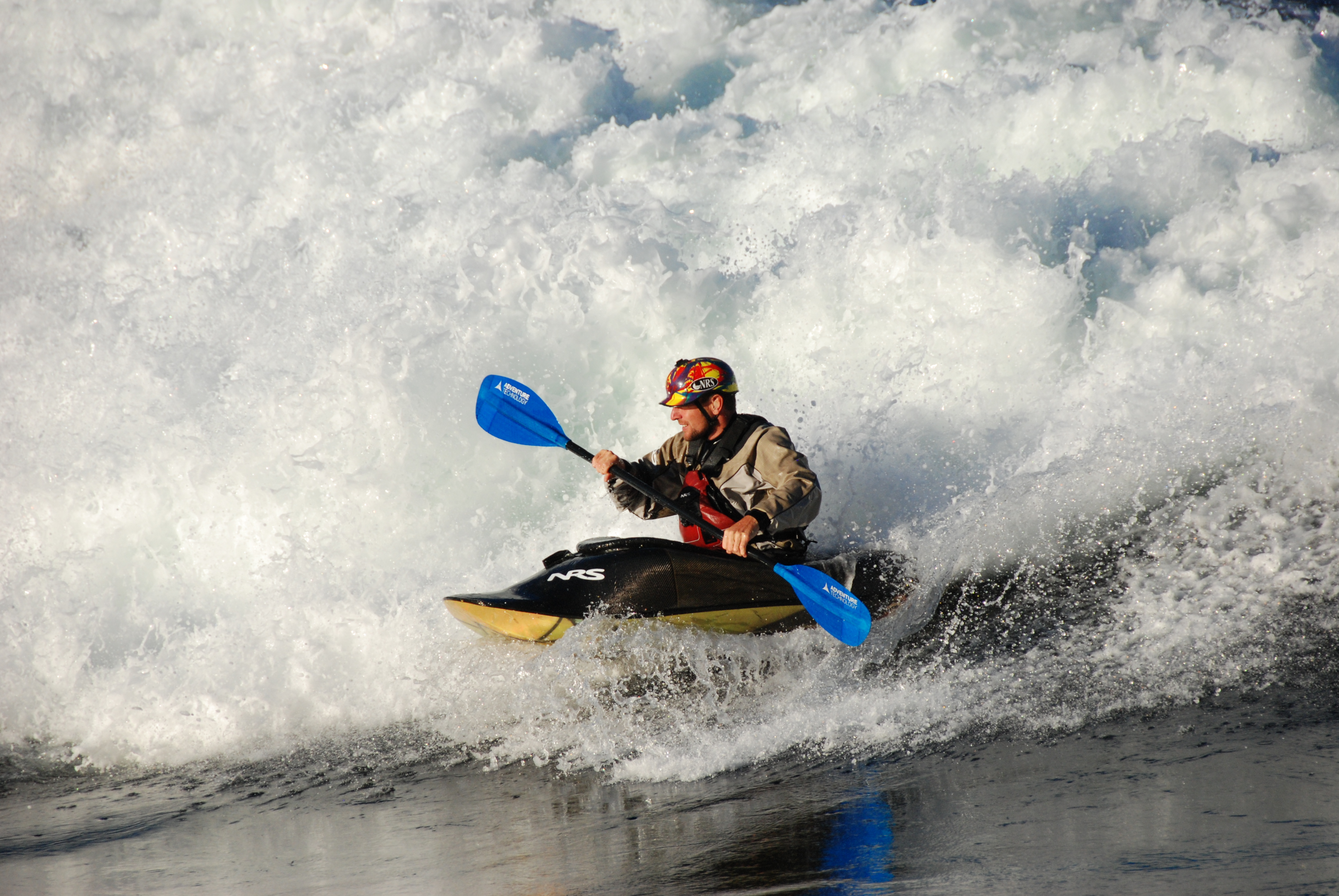
Just up the road was an hours walk through the forest to Skookumchuck Narrows Provincial Park, where vast amounts of water are forced through the narrows twice a day as the tidal flows from Sechelt Inlet, Salmon Inlet and Narrows Inlet run together through the Sechelt Rapids. It’s a spectacular sight as whirlpools and waves froth and foam attracting extreme kayakers wanting to ride the standing waves. The power of the water was tangible and intimidating.

DSC_8155DSC_8157

DSC_8143

Beautiful but deadly. Deceptively calm as water starts to pour into the narrows.

After the vicarious adrenaline rush it was back to a leisurely stroll through the bone dry forest, and later a sip of wine (or two) as we sat chatting on the dock. Not a bad wind down to summer. As I look out through the rain spattered window I realize that any time away (particularly camping) from now on is likely to be a damp affair. And that’s quite alright, rain and wind has its own charm when you’re huddled in a tent drinking coffee, and if  we’re lucky we might catch a few days of sun. Not long to autumn, but summer isn’t over yet!


Saltspring Island

Sometimes all you need is one night away and you feel refreshed. Even if you’re cycling and it’s hot work. We loaded up the bikes with as little gear as possible (still too much of course), got up at 5am one morning, stealth parked the car in a neighbourhood near to the ferry terminal we were leaving from and rode almost straight onto the 8am ferry at Tsawwassen. It’s a gorgeous ride from there across the Strait of Georgia to the southern gulf islands. Sunny, as it is inevitably at the moment (who’d ever think that would be true of this region?), the ride was as ever beautifully scenic.

IMG_1427

The island of Saltspring was our destination, Fulford Harbour our port of call. From there we rode to Ruckle Park to camp, only 9km or so away but on an intensely hilly and twisty road in what turned out to be 33c heat…

IMG_1441

But there were farm stands on the way to stop at with the excuse of buying fresh ingredients to add to our dinner – a fresh yellow zucchini and purple garlic made welcome appearances in our pasta meal – and we loitered in the shade admiring the flowers for sale.

IMG_1457

There’s plenty of farms, fields and a couple of refreshing lakes popular with the locals along the way. We had to ride back later along the same road to Fulford to buy milk we’d forgotten for essential coffee the next morning (we ended up riding that road four times over the course of 24hrs or so) and took our swimming gear with us so we could break the hot ride with a welcome dip. Locals were arriving in droves to find relief in the water from the sun, some stopping only to strip off every stitch of clothing before plunging through the water lilies gathered at the edge of the lake.

On the island there’s gorgeous trees to notice, Garry Oak (threatened) and Arbutus amongst them; eagles to spot; if you’re lucky Orcas off the shoreline or seals and otters. Somehow a rusting heap of a house or barn seemed add to the ambiance of the surrounding area rather than detract from it.

IMG_1442

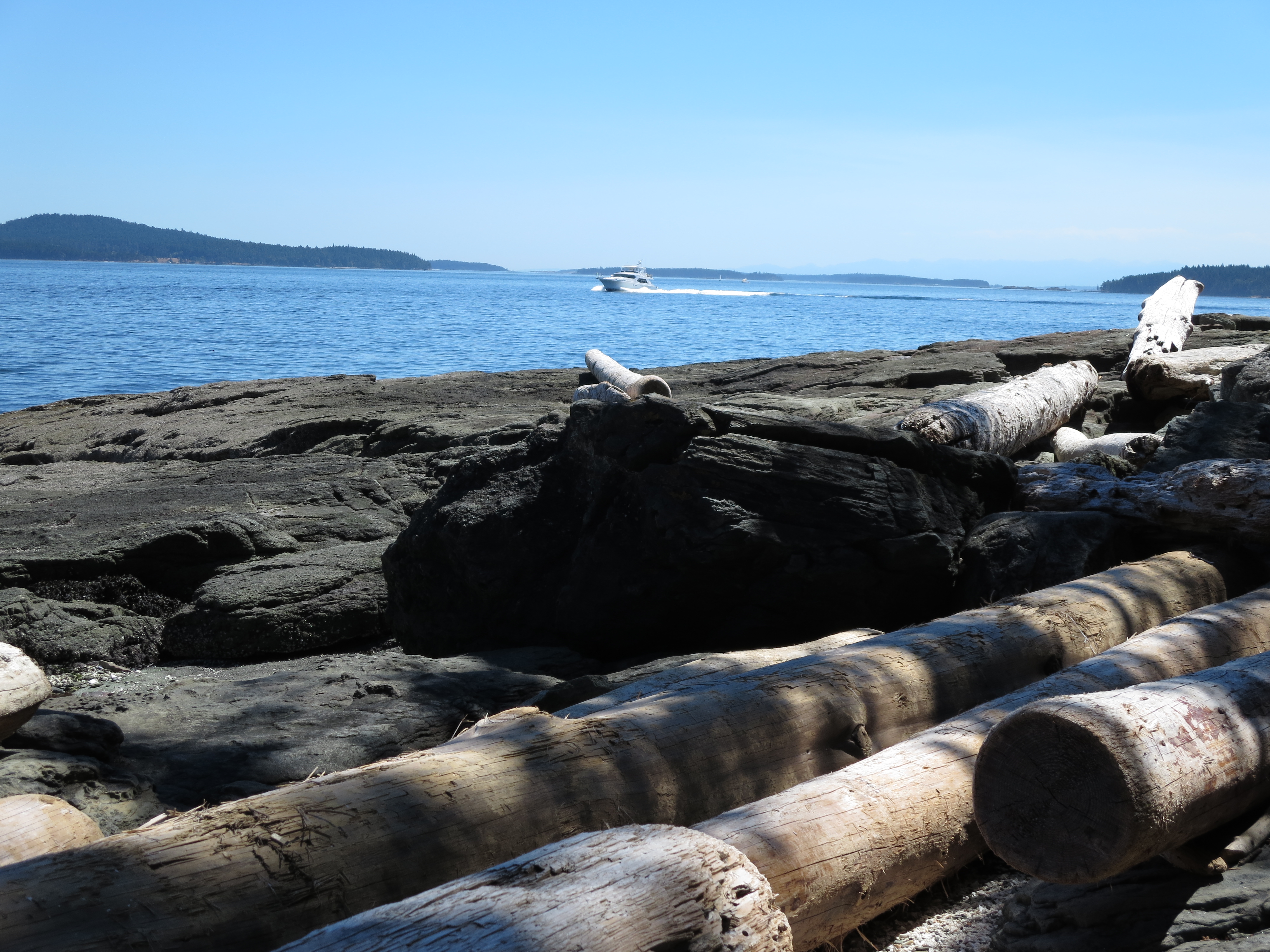
Ruckle Park itself is a great camping spot, set right on the water’s edge with plenty of space between tent sites. It’s relaxing and very quiet. We dipped into the freezing ocean to cool off after our ride in and lay on the dark rocks afterwards letting the warmth sink back into our muscles. In the evening the wind picked up and we left a tent flap open to the ocean to let the breeze in. It was the coolest we’d been at night almost all summer.

IMG_1452

Sitting by the logs washed up on the shoreline we napped and attempted to read. Winged insects were gathered by a stream of something shiny. At first we thought it was a spilled sugary drink but it turned out to be a trickle of fresh water. The heat had made them thirsty too.

IMG_1435

Stunned by the sun, but slowly released from the grip of tension and stress by the ebb and flow of the waves plopping back and forth onto the rocks, in only a few hours we felt as if we’d been away for days. Sometimes the best things come in small packages…..


Hip Nelson

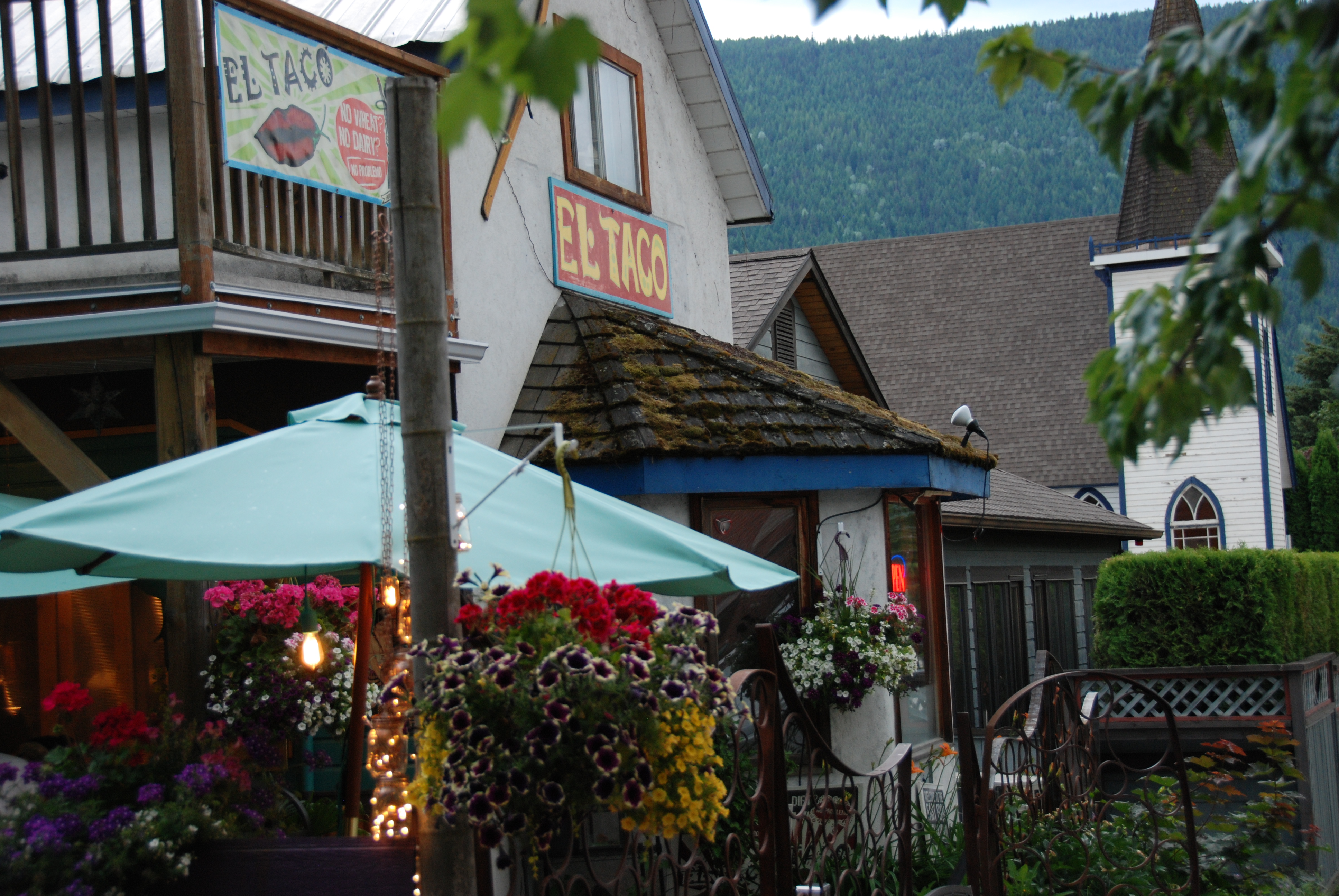
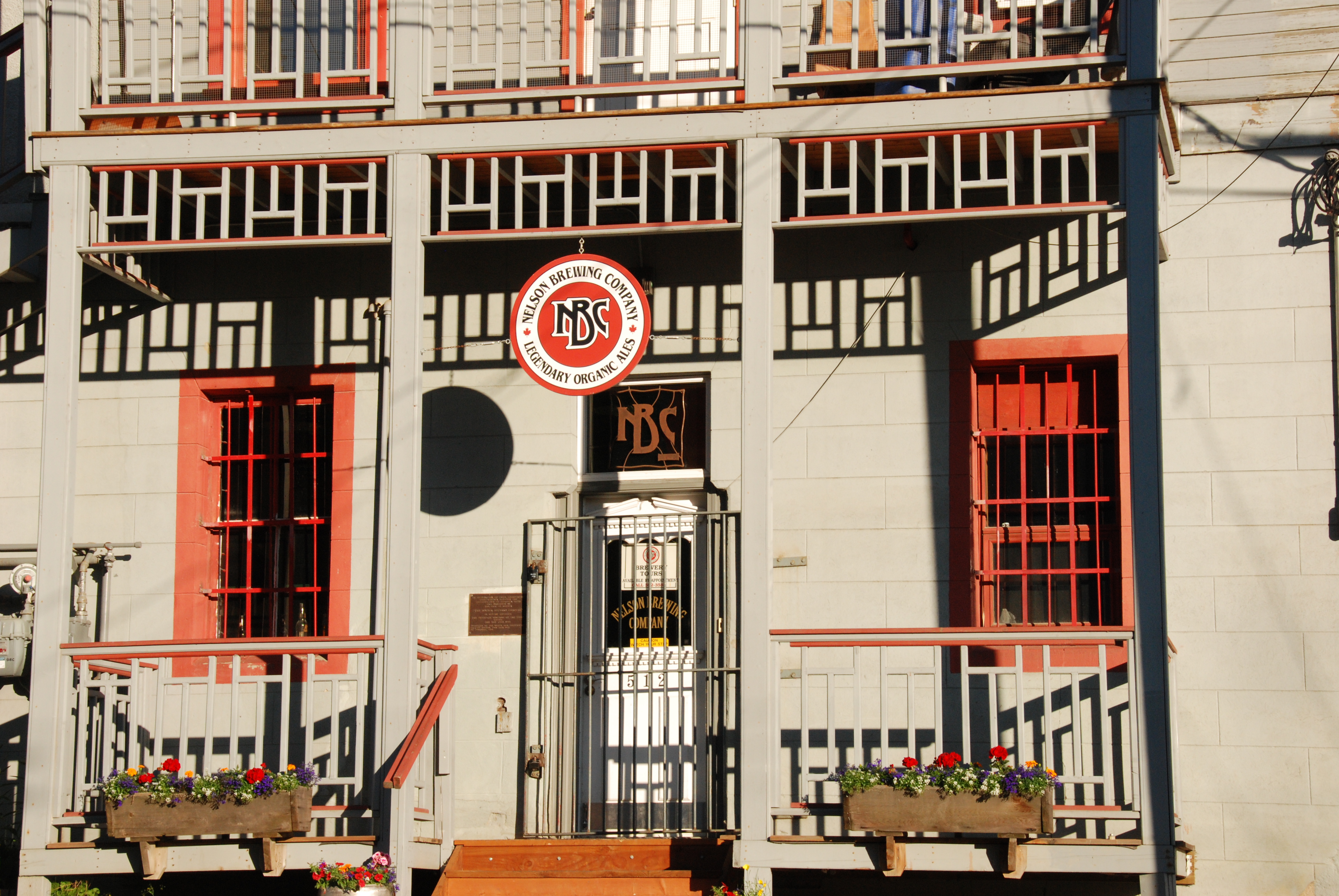
After a five-hour but beautiful drive from the Okanagan to the Kootenay region of BC we wound up in Nelson. It’s hip, it’s historic and it’s full of cool people living a (presumably) alternative life. Kick-started by Vietnam draft dodgers from the US with more liberal views, and cushioned by the wealth produced from a thriving marijuana industry over the last 20 years there’s an abundance of sport adrenaline junkies, organic farms and artisans. Someone remarked that people there were ‘hippicrites’, lots of expensive clothing masquerading as frugality, not part of the corporate world etc. I don’t know if that’s true or not, from locals in the nearby village of Procter we heard that many living in Nelson these days are working at two or three jobs – there’s very little in full-time work available – housing and rentals are expensive after the real estate boom begun in the early 2000’s and we noticed that there were many restaurants charging what amounts to Vancouver prices. We were on a budget ourselves and sought out the more reasonably priced eateries, El Taco was one of the best, $8 for a huge burrito; and a great little Indian restaurant called Baba’s with an outside eating area right on the sidewalk for a mid priced, and tasty butter chicken.

DSC_8062

All that aside, Nelson is beautiful, situated on the West Arm of Kootenay Lake and nestled back into the Selkirk mountains with concurrent steep streets. It’s where Steve Martin filmed Roxanne. I remember seeing that film many years ago, long before Canada was on my radar, and was struck by how beautiful the city was – I made a point of looking up the location – and finally here I was in person. You never know when a seed will germinate.

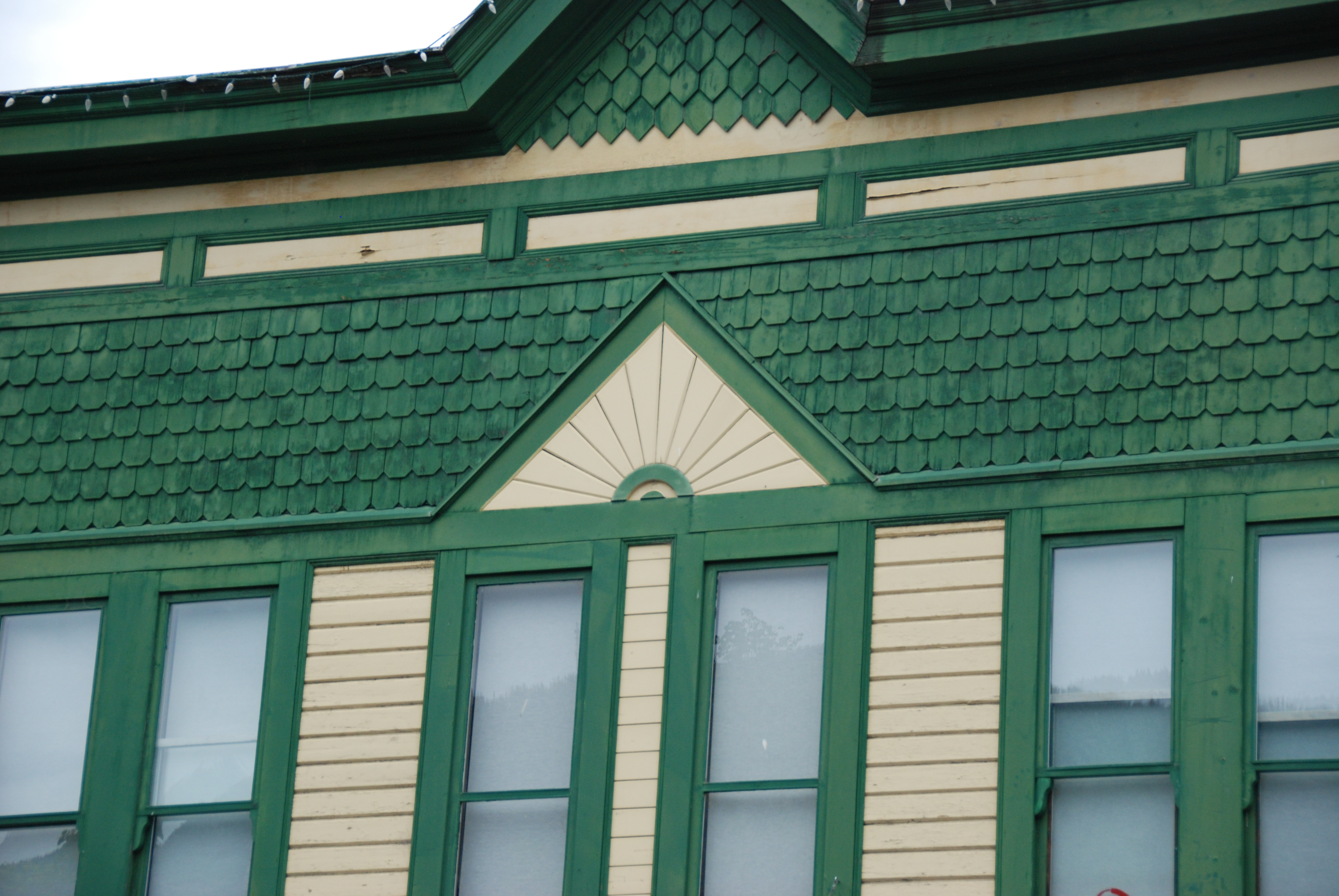
Nelson has something like 350 (or more) historic buildings, restored from the silver rush days of yore. Luckily for Nelson, when other cities were tearing down older buildings and building more modern versions in the 60’s and 70’s, Nelson merchants modernized their buildings with sidings of aluminum. With the surge in historical restorations in the 1980’s, Nelson simply ripped off the sidings.

DSC_7989

IMG_5370

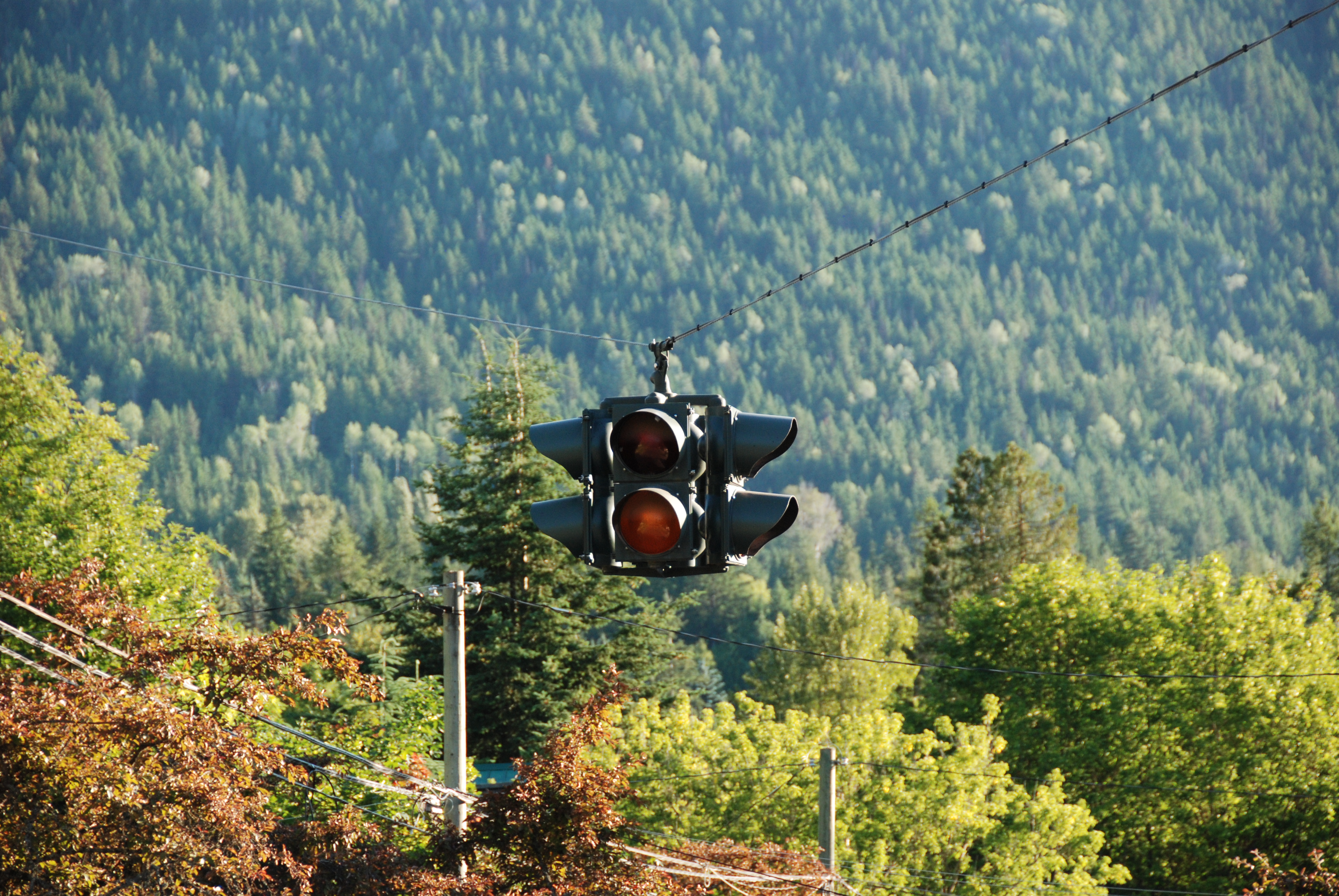
Brake lights necessary! Photo by Scott

Brewing company in the evening light

Nelson Bewing Company in the evening light

We wandered the streets and played with the cameras

DSC_8038

DSC_8004DSC_8042

Battling colds, and so forgoing riding, we made day trips to nearby towns. One was the tiny community of Procter accessed by a free ferry across Kootenay Lake. We’d been told to hit the village bakery for the best cinnamon buns and they didn’t disappoint. As soon as we walked into the bakery, it seemed we were standing in the middle of the kitchen, whilst locals wandered in and out helping themselves to whatever was coming fresh out of the oven. Mounds of dough were waiting to be made into the massive aforesaid buns. Chatting to the owner it turned out that the bakery was once a school, before it became a private house and bakery. When our friendly baker bought the house from the woman who owned both, she ‘threw’ in the bakery and taught him how to make cinnamon buns in two weeks (he said it’s not that hard and you get instant credibility in the village!). Now looking to retire he asked me ‘want to buy a bakery?’. My immediate answer was ‘kind of’. It’s lovely there, peaceful and pretty, but baking?!…..

IMG_5386

IMG_1360

Kaslo was on our list of day trips and particularly the road between Kaslo and New Denver. A beautiful flowing and winding road, it’s a top rated ride for cyclists. Grizzlies and moose can be spotted if you hit it at the right time. We have to go back and ride it….in the meantime we explored Kaslo.

IMG_5403

Kaslo. Photo by Scott

IMG_5409

Kaslo. Photo by Scott

As the heat beat down, we knew we’d need to spend time cooling off. And so we did, lounging on a beach by Kootenay Lake, the latter so glacially cold that we could barely dip into it. Someone picked up a guitar and played really really well. Eventually the sun started to disappear, it was time to leave…..to the sound of ‘Blackbird’ being played.

DSC_8052

Kootenay Lake


Far From the Madding Crowd

It’s hot and smoky (from forest fires raging in the province) here in Vancouver at this moment, and is going to stay that way for the next little while. But it’s not as hot as it is in the Okanagan and the Kootenays, from where we returned a couple of weeks ago from a ten day trip. It was a chance to get away from the city – since we’re forgoing a big trip this year as we save up for a cycle tour in Europe next year (!) – and to hit a few quiet roads, sit around a campfire and generally chill.

The Okanagan was deceptively green, it was already fiercely dry (although luckily hadn’t yet hit the mid 30’s) and the scent of the ever present and abundant sage as we drove into the region was already in the air as the oil was released by the heat. We had turned off the main highway onto Twin Lakes Road, quiet apart from a few cyclists, and which ultimately leads to a gorgeous valley that provides a protected home to a huge variety of birds, some of which are endangered. From Twin Lakes Road we turned onto White Lake road, with one of several alkali ponds in the area, and officially the White Lakes Grasslands Area. The glare from the minerals around the lake was intense as we stopped to listen to the meadowlarks by the side of the road. It’s a ritual we perform every time we go to the Okanagan. The fact you can step outside of the car, lean against it and listen for a while to the birdsong without the distraction of peripheral noise psychologically signals to us that we’re really on holiday, and that we’re in a special place.

IMG_1402

White Lake

IMG_1397

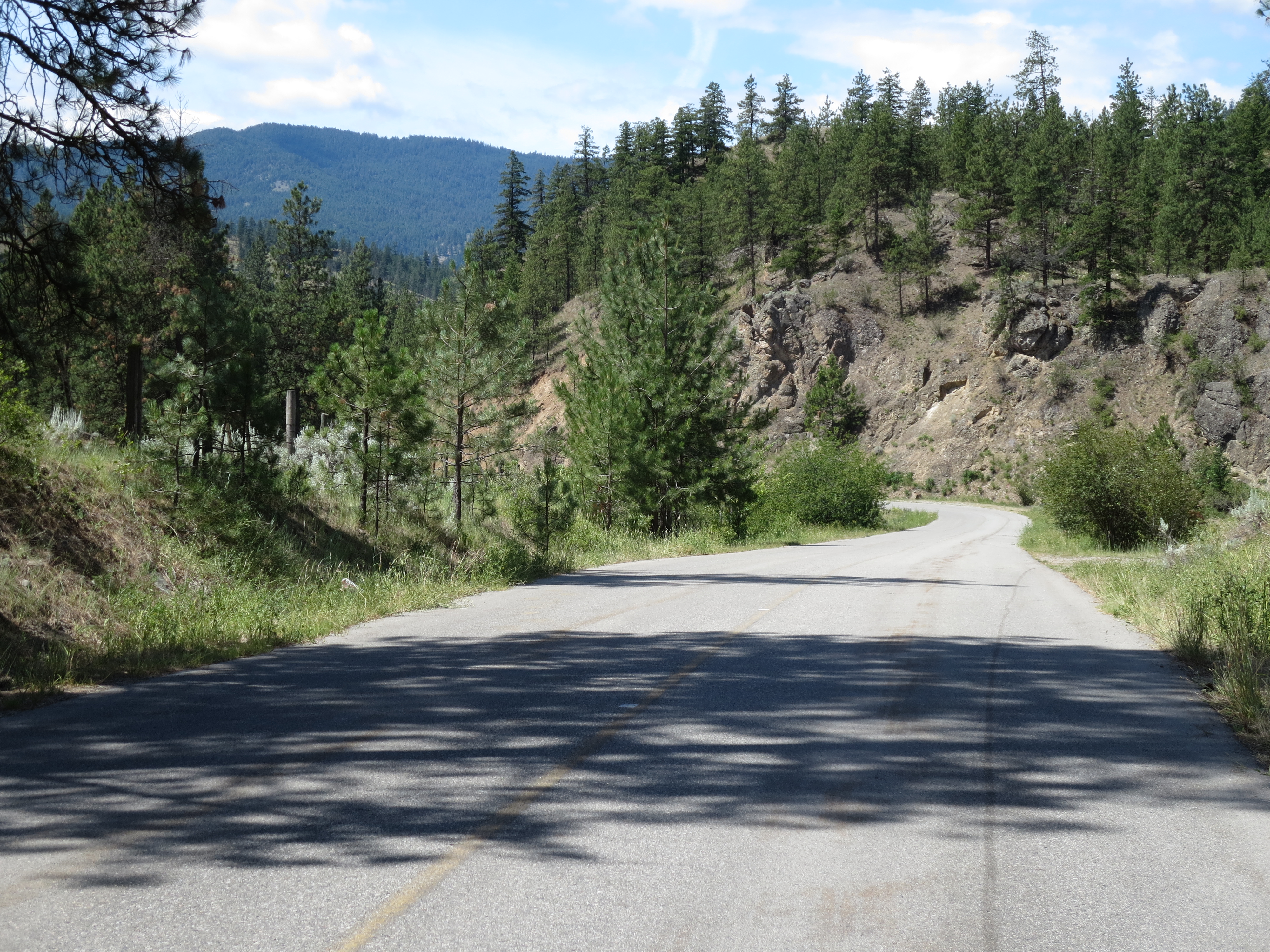
Cyclists on White Lake Road

The area is one of the driest of the province, home to fragile grasses, Ponderosa Pine and red and blue listed amphibians, reptiles, insects, bird and plant species. For us, putative twitchers that we seem to have become, the birds appeared to us most frequently. We camped in the Okanagan Falls Provincial Park, off nearby Green Lake Road and woke to the twittering and chattering of California Quail as they herded their young around. Woodpeckers, swallows, northern flickers, hummingbirds, all seemed quite comfortable in the peaceful campground. Bats took over the watch from swallows in the evening and flitted about our heads on their sharp trajectories. Visiting friends who live nearby overlooking an exquisite valley we saw what looked like either a Bullock’s Oriole or Baltimore Oriole and heard the distinctive high pitched whoomphing noise that the Common Nighthawk makes as it heads into a territorial or courtship display dive after dropping from the sky above the trees.

The wildlife also makes the roads hazardous, we constantly watched for marmots, deer, snakes and bears in the car, in an attempt to avoid hitting them. The collateral damage on these country roads is pretty high. On the bike it was a little easier. It’s a great riding area, scenic, quiet and the best way to get around so long as you head out before it gets too hot and take into account the roads can be a little rough. A small price to pay for the deliciousness of clean air and the chance to listen to the environment and its inhabitants around you living and breathing.

IMG_1391

Heading out on Green Lake Road for a short (50km) ride

IMG_1405

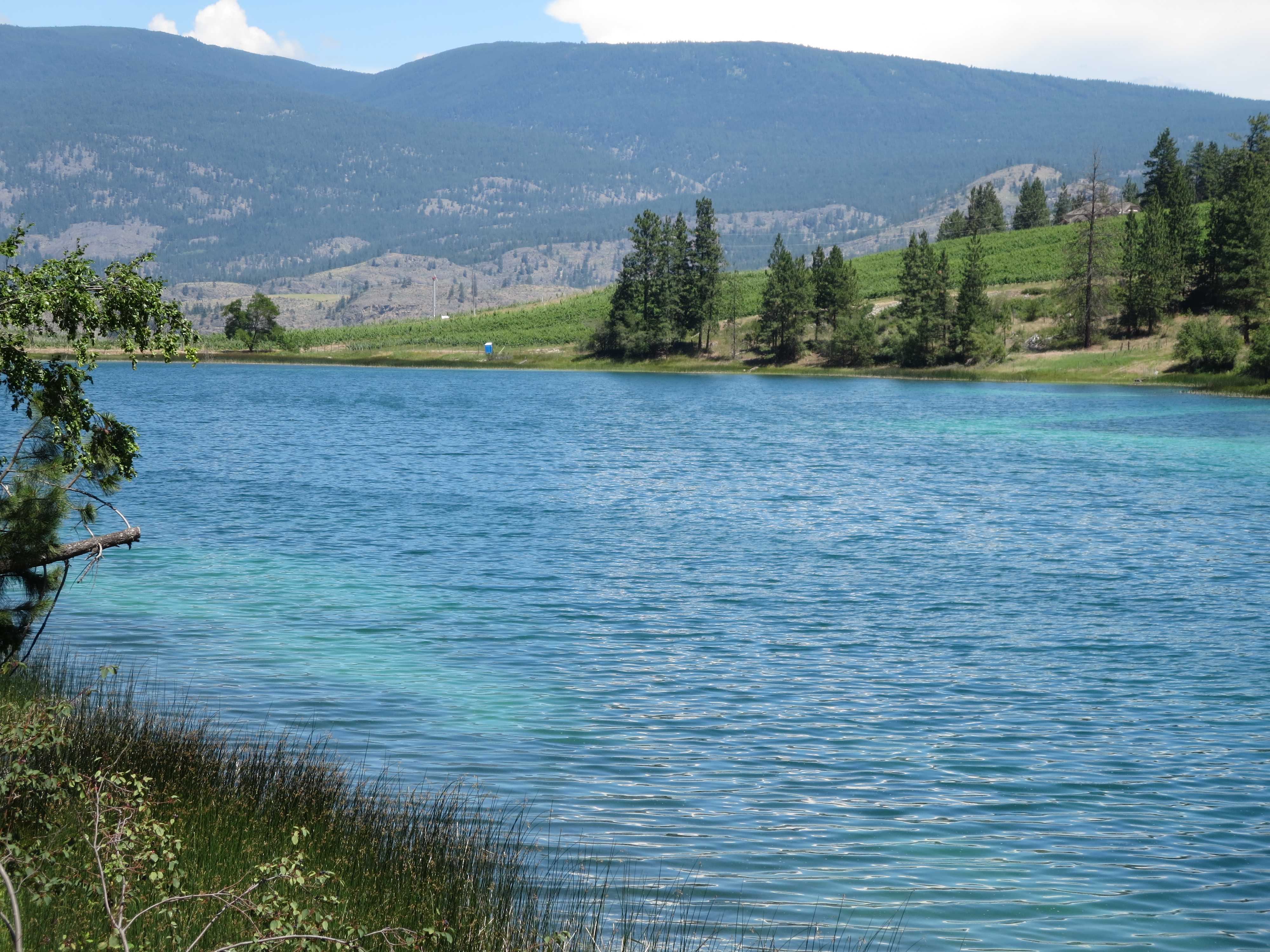
Green Lake

DSC_8073

Evening light on the hills